0:10:57
Headless Wagtail CMS: Serializing RichText Stream Blocks
Published November 29, 2023
This video features Kalob Taulien at Wagtail Space US 2019 in Philadelphia, Pennsylvania, USA.
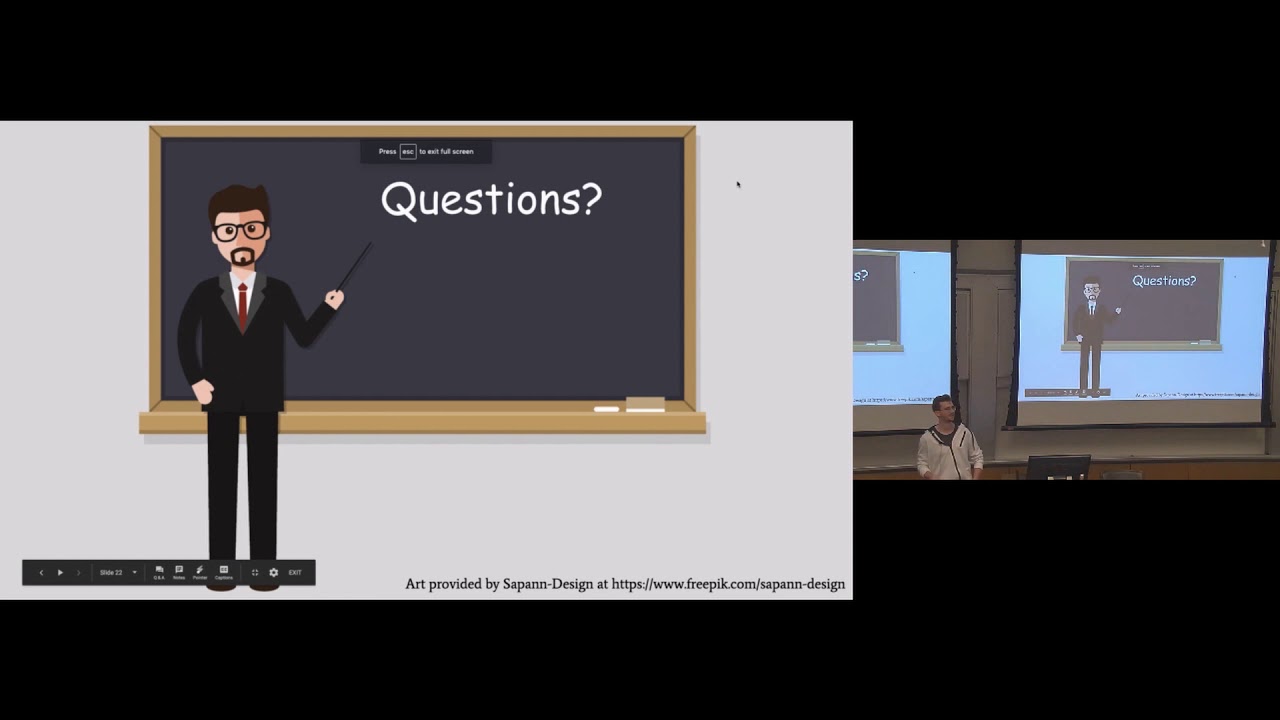
Contributing to Wagtail does not have to mean writing code: answering questions, mentoring, teaching, creating videos, writing documentation, translating, and speaking at meetups or conferences all help the community. The speaker describes starting with one-to-one support, then making Learn Wagtail videos to reach more people, and argues that contributors should choose the ways of helping that suit them. In the Q&A, he notes that the community is welcoming to first-time contributors, documentation can be a less intimidating first PR, and design work benefits from early discussion and feedback.
Summarised automatically from the transcript.
Automatically transcribed, so expect mistakes in names and technical terms.
Speaker 1: Okay, I am going to be talking about how uh contributions to projects like Wagtail can be more than uh can be more than code. Uh there's actually a nice way of putting this. There are additional ways to contribute, not just that. I'm devaluing code contributions or anything like that. Quick little thing about me. Hi, I'm Caleb. I'm the author of LearnWagtail. com. I made the Learn Wait till video series and if we ever get caught in an awkward silence and you want to break that, just mention like goats or gardening or something. So I'm going to start this off by stating that most
Speaker 1: people want to contribute to an open source project. But the fact is that a lot of people don't really know how or they get scared. They don't know how to make a PR or they don't know where to start. And for me, this is sort of a journey story of how I got involved. That's how I felt inside before I made my first PR. I was very apprehensive about it Uh I really wanted to contribute to Wagtail and I didn't really know where to get started, so I started looking at PRs and I looked at everybody else's PRs and I was like, wow These are way over my head at the time and making my free
Speaker 1: my first PR was pretty terrifying actually. And so I decided instead of you know opening my first PR, uh I was going to contribute in my own way. And that just really looked like a lot of community support. So answering Slack questions, Stack Overflow questions, and doing a bunch of one-on-one mentoring with a few people that I work with and a few friends. Yeah, that guy. I like to think that was me with a red tie. So mentoring one-on-one was something that I really, really enjoyed, but there was a fundamental problem with that is I wanted to help more than just three people at a time. I wanted to help 50 and then 100 and then 500 and then a thousand
Speaker 1: people. And when you break it down, mentoring a thousand people in the span of like a year is probably impossible or they're gonna get really bad mentorship. And so the problem with this was it wasn't really scalable. And I decided well if I'm gonna be teaching this to people, I might as well Make videos, throw them up on YouTube, and everyone else can uh can consume those videos whenever's convenient for them. And that's sort of at the point in time when I realized that contributing to a project like Wagtail doesn't necessarily have to be in the form of code. I was helping people learn, I was answering questions, I was helping the community out by answering uh
Speaker 1: stack overflow questions And yeah, so there's more than one way to contribute to a project. But it was at this point I didn't really understand that. It was sort of a brand new concept that was just sort of in the back of my mind. And so what I would like to really talk about is this idea that there are other ways to contribute to. Wagtail. Uh you can give a talk. Well actually first, some public options here. So I broke this down into two areas, so public and private. It's not really private, I'll talk about that in a sec But you have public options like uh giving a talk, like coming here, giving a talk, even attending a conference like this or setting something up. Uh if you go to your local Python meetup or a Django meetup and just spread the good news of
Speaker 1: Wagtail. You can make videos, you can even write documentation, but these are all sort of putting yourself out there and that's not for everybody. That makes a lot of people kind of nervous. And so I have a small, very small list of private options. Not really private, but they can be largely anonymized. So you could write tutorials on your website, you could write blog posts, you put it up on Medium. Medium. com, you can mentor people if that's more your style. Uh you can answer community questions on Slack or Stack Overflow as well. And these are all ways that you're still You're helping build the entire Wagtail community. Even if you're just answering one question, it still helps contribute to the project in an indirect way.
Speaker 1: And so a key takeaway here is that you can contribute the way you want to contribute. A lot of people think that When they contribute to a project like Wagtail or any project, that doesn't even have to be code, it could be literally anything in life, they think that, oh, there's only one particular way that I can do this. And that's not true at all. There are several different ways that you can contribute to. pretty much anything in life. And again, it doesn't have to be code, although code contributions are helpful. So for me as a walking, living, breathing example of this, uh a major contribution that I like to do is I make uh A video series called Learn Wagtail. You can find it at Wagtail.
Speaker 1: io slash course. And I can provide them with some sort of education. And additionally, uh I'll I'll help people Um well in several different plays. Slack, Stack Overflow, Reddit, Facebook groups, direct messages, emails, you name it. I've probably been there at some point in time. And that's how I like to contribute to the whole White Dell community. So the big thing that if you take one One note away from this talk is that contributions
Speaker 1: can be more than code. They don't necessarily have to be more than code, but they can be more than code. That's it. Nice and quick. Are there any questions? We probably have tons of time for questions. Oh yeah. Grill me. Yes. Which one? Oh yeah, I purposely left that one out.
Speaker 2: You can convince so you can pay people you know for different things, but you can also like convince your company to contribute in some way. Like
Speaker 1: so I left money out on purpose just because that one is, in my opinion, it's a little bit um Obvious. Uh but yeah, I mean if if you can, awesome. So like if you're interested in helping a foundation but maybe you don't have the technical skills or you don't have the time, yeah you can You know, give them some money and that helps them. I mean even if it's like five dollars for a beer or a cup of coffee or something, I mean that's still showing a lot of appreciation. That gets that gives people the energy to keep on going, right Yes.
Speaker 3: So what made you pick Wagtail to do the series? Like what what about that? Like when you have you created other like educational series on YouTube or is that your first one?
Speaker 1: Um the only CMS I've ever covered is Wagtail. Um sort of as a profession, that's what I do, is I make uh courses on web development and then I saw them. Uh Wagtail, I noticed that Wagtail didn't have a lot of They didn't really have any videos. I think there was like five or seven videos, something like that. And actually I had this idea of oh man, it was year and a half ago, I was like, oh, someone will eventually make these videos, and no one did. And so I thought, well, I'll do it. And the reason that I picked Wagtail is because Wagtails the future of content management systems. Might be a little opinionated.
Speaker 1: But it also it's a community that that would really value that kind of education, I think. That's why I think that
Speaker 4: How did you figure out like what to cover the
Speaker 1: Uh yeah, okay, that's a good question. Uh I originally started um as a course and I was I was gonna make like just a simple little blog website or something. And then my list blew up from like seven videos to 17 videos to 40 videos to like seven plus videos now. And it sort of just took a left turn. It it started off as like, here's a course, I'm gonna guide you through it. And it was like, oh well, we gotta learn this, we've gotta learn this, and we've gotta learn this, and all these other things. And it's like, well, I'll just make videos on all of these different things And it's not really a guided course anymore than it than it is like a large video uh tutorial series. And there have been some dry spells where it's like, I don't really know what to cover that's going to be super valuable to people.
Speaker 1: So I take suggestions. So if anyone has a suggestion for a video that they'd like to see, throw it at me. That's it. Oh.
Speaker 5: Do you have suggestions? to make the PR was just more necessary.
Speaker 1: Um no, I don't think I have suggestions to make it less Less scary. Uh my advice though is just like try to make a PR because the Wagtail community is super supportive. Everyone is very, very friendly, like what Naomi was talking about. It's not something that you need to feel a tremendous amount of anxiety over. Just I had a lot of imposter syndrome at the time and it was getting the best of me. And so I sort of went down a different path. But for anyone else who's uh a little worried about opening their first PR, I would say you don't have anything to worry about. It's a good, healthy community that'll take care of you. Yeah.
Speaker 6: I would say another contribution, private super private contribution to relations. So you can translate into 88 languages, like the words are four. Not that. Uh so like uh if Y Tell is available in English and French and in Spanish, right, you might be able to translate it into um Yeah.
Speaker 1: Uh yeah, that definitely counts. That's actually a big thing because there's a lot of people who don't just speak English. Or read English. Uh if you want to contribute in any sort of manner like that, I mean I would say definitely go for it. Um a lot of that's probably documentation as well. And so I sort of had that on there at one point Uh contributing documentation is still opening a PR, um, but it's not quite as scary as like comparing your code to other people's code who've been working on Wagtail for three or four or five years now.
Speaker 7: Do you have anything that like for example these are things I had a problem with when I first did it, you know, for 16 years old. It's easy to make mistakes.
Speaker 1: Okay, I'm sorry, I catch a question on that one.
Speaker 7: The question is, do you have anything in your videos or array? things that were good things to you know say try to avoid this versus just going through uh video that says the society should do it.
Speaker 1: Uh not so much, just because uh I don't want to tell people how to do their jobs or how you can or cannot do something. Wagfill's very flexible. Uh so you know whether you want to use a stream filled or an orderable, I mean I can't really tell you which way is going to be better for your particular their project. It might be one or the other, but without any context, I can't really guide you. So usually I just say like here's how you make an orderable and here's where you would use it. And here's how you make a stream field and here's why and when you would use these Hi.
Speaker 8: Uh I just uh thought on making first pull requests less scary as someone who has done First pull requests that were scary. I do think that doing documentation once first has often helped me just to like show me that people are nice. And also um asking a specific person to look at your first pull request and maybe putting a note in it about how it's your first pull request like I'm Sarah, be nice to me. And also saying to the f the like person you've asked. Like I'm scared to be nice to me also here's what I'm trying to do and like can we look at it in person if you're at a sprint? Which we are.
Speaker 1: Yeah, that's that's fantastic. Thank you. Yeah that's a really good way. Actually I think my first PR was actually documentation.
Speaker 7: Once reading the tutorial, who will want to give most uh major requests on, you know, uh for you to enlighten on uh a subject about why excel.
Speaker 1: Um
Speaker 7: anything else to say?
Speaker 1: There's there's a lot, but it's it's all very scattered. Probably stream fields. Stream fields seem to be uh A little bit hard for people to grasp at first, but then once you sort of jump into it, it's like, oh, this is actually a beautiful invention.
Speaker 4: What have you learned about Wagel through making videos how to learn about Waggell?
Speaker 1: I have learned how to a lot of things, but I think the biggest one is I've learned how to simplify explaining technical features to people who may not be super technically savvy at that point yet. So like someone who might not know Django or Python could learn WebTel. That's probably the biggest thing I've learned. And there is one more back there. Yes?
Speaker 6: Um so I've always had pretty town contributing code, but something that's never been clear to me is how to contribute design more. I'm curious if you guys how do you make you this for how you can do that process successfully.
Speaker 1: I actually don't know how to answer that. I mean if anyone else does that would be awesome. Yeah.
Speaker 8: Generally in the issues where design work happens, um Maybe also the sort of thing that gets into like a request for comments. Um I think For anything that you think might be contentious, especially, it can be good to talk about it in Slack and say, hey, I'm thinking about doing design on this. Like, does anyone have input early in the process? That kind of stuff. Because if you just show up with fully formed design, it's pretty likely to flop. But if you say like, here's a thing I'd like to work on changing, how can I do this process well then people will help with that.
Speaker 1: I think asking for help is a big thing too if you just put it out there. It might make you feel a little bit vulnerable, but if you put yourself out there, people are generally very nice. They'll help you out with it. I
Speaker 2: think a decent strategy for that just kind of figure out some of the projects that I've worked on are better but if there's a design uh client design language and like new features that you can start to build on based around ACM side helpful. I think contributors come into projects that have just one like a suggestive side change to align dates like where did this come from Like that. So that's one of the one we're part of the feedback to uh reject it.
Speaker 1: Yeah. All right, that's it.
Make educational videos that people can watch whenever it suits them; that lets you share what you know with many more people than individual mentoring can reach.
Discussed at 2:16You can give talks, attend or organize meetups, make videos, write documentation or tutorials, mentor people, and answer community questions. Even answering one question helps the project indirectly.
Discussed at 3:03Yes. You can donate directly or encourage your company to contribute; even a small donation can show appreciation and help keep people going.
Discussed at 6:52Wagtail had very few videos available, and after waiting for someone else to make them, he decided to do it himself. He also believed the community would value educational resources about Wagtail.
Discussed at 7:39The series expanded as he identified more topics learners needed, and he also takes suggestions from viewers about useful videos to make.
Discussed at 8:44The Wagtail community is friendly and supportive, so he encourages people to try. An audience member also suggests starting with documentation and asking someone to review the PR, explaining that it is your first and requesting help.
Discussed at 9:50Yes. Translation helps people who do not speak or read English, and it can also be a way to contribute to the documentation.
Discussed at 10:55Start by raising the idea in the relevant issue or an RFC, and ask for input in Slack early—especially if the change may be contentious. Getting feedback before presenting a finished design can help it succeed.
Discussed at 15:01Note: We understand that names change, people change, and bodies change. We respect each individual's journey and privacy. If you have any concerns about a video or need us to remove content, please don't hesitate to contact us. We will handle your request with care and promptly address any issues.

Published July 19, 2024

Published July 19, 2024

Published July 19, 2024

Published July 19, 2024

Published July 19, 2024

Published July 19, 2024