
0:05:40
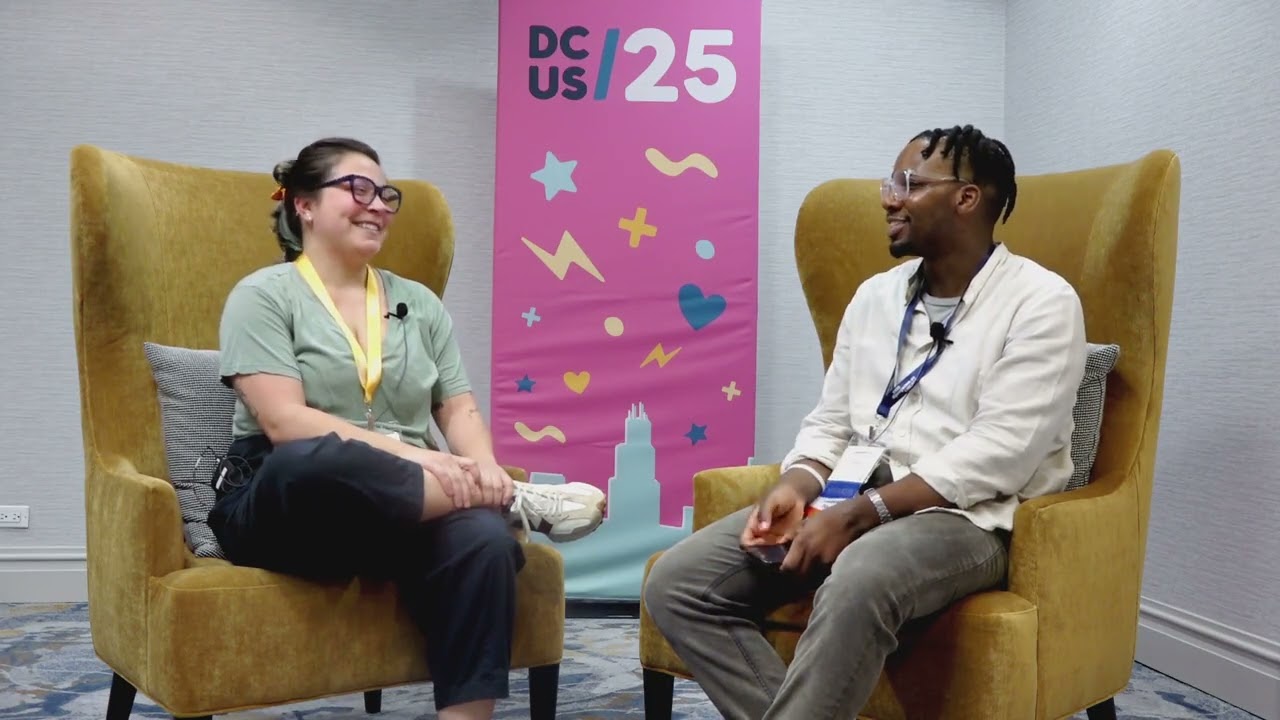
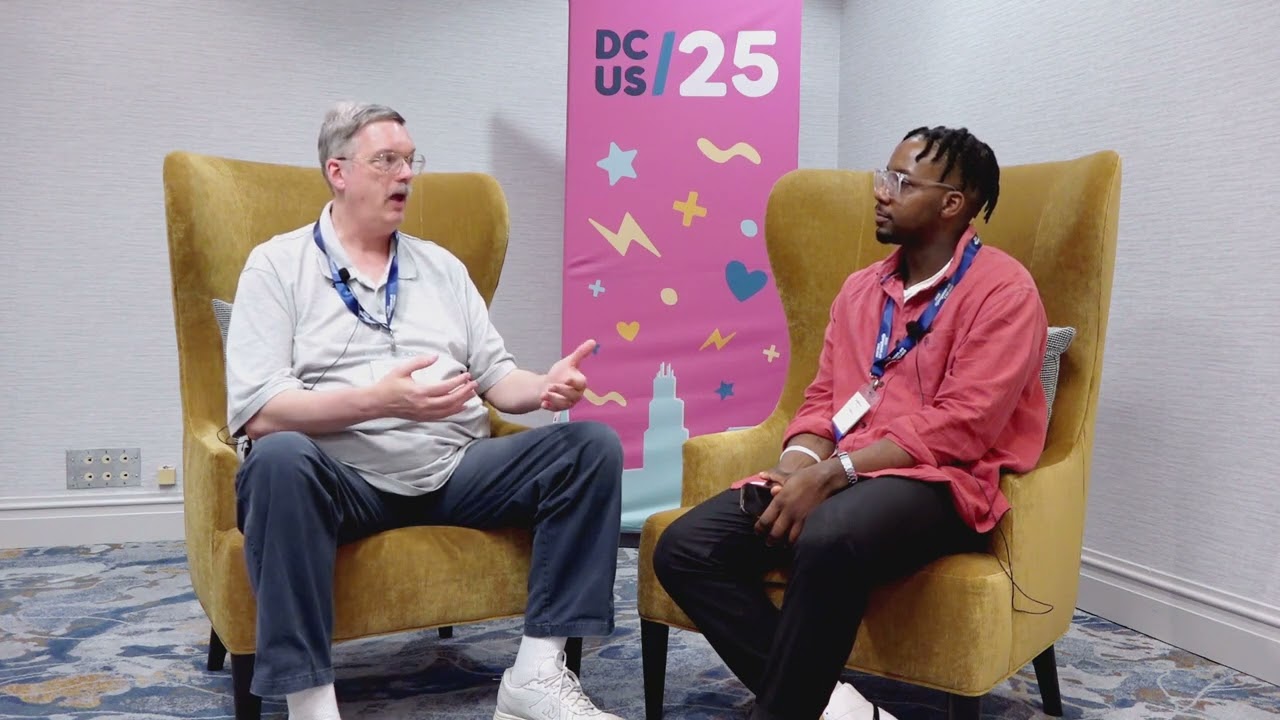
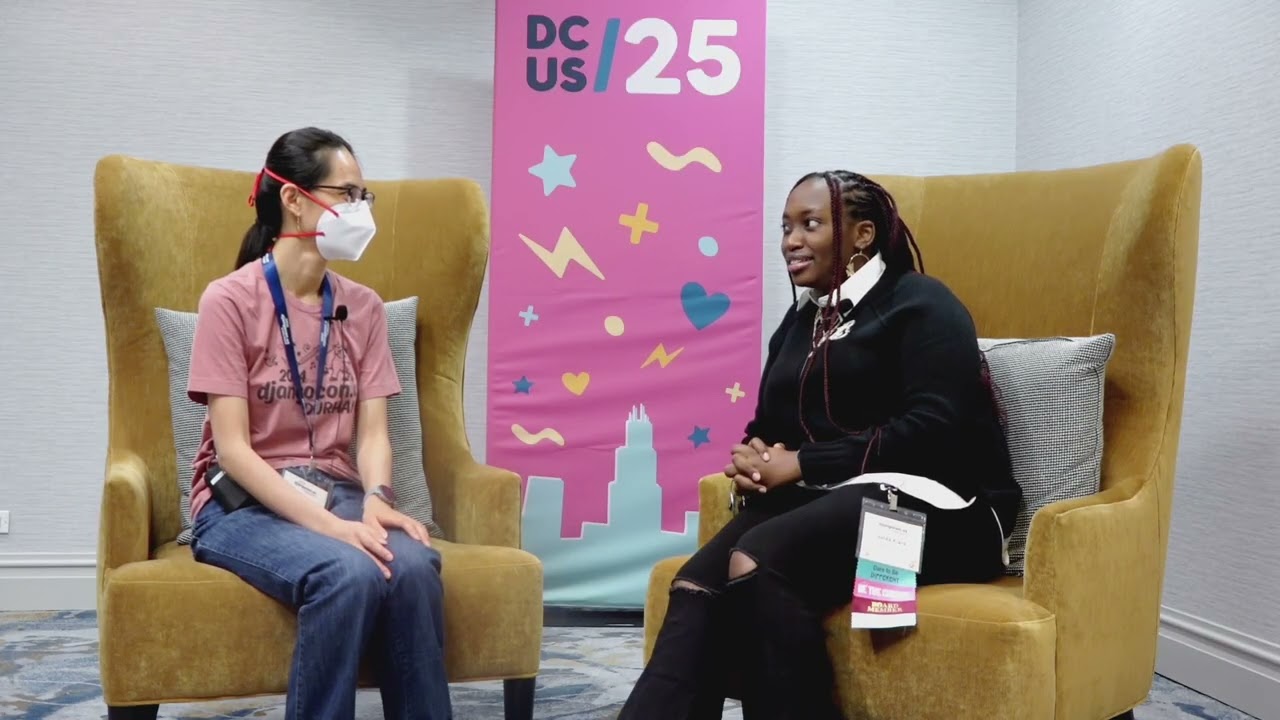
Creating an Inclusive Django Community with Kenya Phelps
Published July 15, 2026
DjangoCon US 2026
This video features Alicia V. Carr at DjangoCon US 2017 in Spokane, Washington, USA.

DjangoCon US 2017 - Opening Keynote - Is it too late to learn how to program? by Alicia V. Carr
Alicia will discuss the challenges she faced as an African American woman in becoming an iOS developer at the age of 51. As a self-taught developer, she created a mobile app dedicated to helping victims escape domestic violence and abuse. She has seen the best and worst of the tech community. As demonstrated by her app, she believes that the tech industry can improve and change lives if we open our arms, embrace change, and think about how women can change the way we see and create apps.
This talk was presented at: https://2017.djangocon.us/talks/keynote-1/
LINKS:
Follow Carlos Martinez 👇
On Twitter: https://twitter.com/Fineblkwoman
Official homepage: http://www.coffeewomenandtech.com
Follow DjangCon US 👇
https://twitter.com/djangocon
Follow DEFNA 👇
https://twitter.com/defnado
https://www.defna.org/
Alicia V. Carr describes becoming a self-taught iOS developer at 51 and creating a domestic-violence safety app after seeing its effects on her family and friends. She recounts learning Objective-C through meetups, mentors, and a low-cost boot camp; overcoming Apple’s rejection process; and receiving recognition at Apple’s Worldwide Developers Conference for building technology for a social cause. Carr argues that coding is accessible to people who take the first step, regardless of age or background, and that the technology industry must confront its history of excluding women and people of color. She highlights unconscious bias in hiring, promotion, workplace culture, and parental responsibilities, and calls on men and technology leaders to become active advocates for inclusion rather than expecting underrepresented groups to solve the problem alone.
Summarised automatically from the transcript.
Automatically transcribed, so expect mistakes in names and technical terms.
Speaker 1: Good morning, ladies and gentlemen, techie geeks , everybody out there. She introduced me to Alicia Carr and My talk is about how I got to this point in my life. I did not expect this to happen, but this is something that every person needs to hear. How social um development changed my life. You can follow me on Twitter. I'm Fine Black Woman. I do have a podcast for um while for focusing in tech. I talk to women about being in technology and not realizing that they're in technology when they work for in the Turk community.
Speaker 1: I also want to acknowledge Woman Cole Atlanta. As you can see, these are all my sisters with a wife. This was at a hackathon we had been for all women. We had 13 poll that came out. They had no experience. 80% of the women did not have any experience in hackathon. So we exposed women to them at this event. So What's my elevator pitch? My elevator pitch is I'm the first African-American self-taught iOS developer that created the first domestic violence act for the state of Georgia at the age of 51. And
Speaker 1: so it's crazy how I I have always been in technology But the crazy thing was that I've always been an Apple fanatic. I was standing online in my second generation iPad. I met this 16-year-old boy And I was like, you know, I'm old school. Old school. No parent in their right type can find a different $4,800 for iPad. That's a card no payment, that's your mortgage. So I asked him, I said, so how do you make this money? Wash some cars, so Mosel lawns, and he's like, no, I build an app. I'm like Oh, so you must have gone to Harvard, you know. Six years old, you must be, you know, Harvard, you know, beyond. He's like, no, I thought you were YouTube. And I turned to my husband, I was
Speaker 1: like, shh That's not what I'm doing. So, well, so you know, you know, it passed by, time passed by, and um I was like, okay, what so okay, what am I gonna do? I'm tired of my job. I'm working in an environmental company. I was doing some I was doing the tech work as well as with creating support for for them for PTV. And so um my husband came to me and said, um Why don't you look at finding so iOS? Okay. Sure. Okay. Whatever. Um. So um oh See, y'all still can hear me, right? Um so m I went ahead and start doing my research.
Speaker 1: Looked at some school. Big nerve ranch was located in Atlanta, but they wouldn't take me in because they wanted you had to pay for the whole thing, including a hotel. And I was like, well I'm gonna give you money for a hotel and I'll live down the street from you Y'all, that's not gonna happen. So I uh reached out to a meetup group in Atlanta called Atlanta IOS Developers Group, final mentor. He helped me with the Big Neural Ranch book, which I wasn't too good at. Um, I hate reading. And every time I read, I was skipping over something, creating this app for I'm learning iOS or Objective C, because this is the first time I'm learning Objective-C. Objective-C took me a year and a half to learn Um, because I didn't feel confident enough to believe that I knew what I was doing. I you know, as a woman we have to build that confidence. Men are you all more than well confident enough us so I wasn't I mean
Speaker 1: my problem was what did I have the ability to learn objective C. So October It was September um 2013. Um somebody posted a boot camp on the um actual meetup for Atlanta iOS developer for $125 for boot camp. It was a three-month Boot camp, which y'all all know right now, if I pay $125 for boot camp, that shit is overpriced right now. And it actually that three months Learning Objective C, I learned it, understood it, had no problem with it. And at the end of that time, I w uh I reached up to my mentor. I was like, well, shoot, I don't, you know, I finish up this um The tutorial, I don't know what to do. He said, Well, we know why don't we, you know, work together and build a domestic violence app?
Speaker 1: And I was I started crying because um My family, my friends, I've lost a girlfriend from domestic violence. She got shot in her driveway. Um my mother was a victim. My aunt was a victim. My daughters were victims of domestic violence. My best friends were victims of domestic violence. violence and I knew then that when he mentioned it that was something I needed to do. Me and him had a conflict with how we wanted to build, so I went rogue I did that shit on my own. And what I did is I did a lot of research to to figure out what should be in there. So when I did that, the first version of the app was called um purple pocket book. And it was and my son helped me build it for Android. Now me and him had
Speaker 1: bump heads with it, but he did do it for me and he succeeded. And completing it. So that version is on, it's actually still on Google Play. Um, I had to rechange the name because there was a conflict of interest with Purple Purse, which is All State. So they reached out to me and told me I had to They said there was a conflict and I needed to change the name. So I had to change the name across the board. But the only place it hasn't changed is Google Play Yeah, she's laughing because she she knows. So in twenty fourteen uh in twenty fourteen I st built the app in three months. Um, try to submit it to Apple. Oh, hell broke loose with that. Apple done told me, rejected me too many damn times. So
Speaker 1: and it was because the size of the app, this the screen size, and um were wrong. So the origin when I was in there I was building it the long way, the bigger way to s the screen size, when the phone was still smaller. So I had to go in and change all the screen size to what the app was actually the phone size was. And that took a couple of hours. I fixed it, submitted it it was approved in um Apple and May 2nd. I could never forget that day. Never forget a day when it took you months to submit it. So later on, 2015, we had to change the name to Pivot. So the original app is now called Purple Evolution Pivot. Of course, then um Women the Co.
Speaker 1: came along. Um around the time I was building the app, I would have problems. One of the members of Women the Co. who was not a developer Help me fix the problem. So we went to Starbucks and we went through the Apple Forum and we found out what the problem was. And that's how I came a part of Women of Code. Because I realized that When I reached out to the to the men, it was more so I felt uncomfortable. I f I felt that um It was an emotional thing because you know, um, some of the men were being very controlling and um You know, it was it I didn't feel comfortable talking to him because I didn't want to be I'm building this app. I didn't want the the I was already in emotional strain because it was a domestic violence.
Speaker 1: And I need somebody to actually say sit down, let's go do it. We found the issue, let's fix the issue. And that's how I became a member of the Women Co. I created a a group in Women Co. called Women IOS Developers Group to help women to learn how to co um learn Objective C From there, them helping me with the app, making it more successful, was everything. And so being a part of Women of Cole was, you know, once it was fixed, I was so happy. I was just so happy. So once I got there and started building my uh did my group, one of the directors said, hey Alicia, hey, do you want, hey, we got tickets to go to WWDC 15 It's a scholarship. Do you want me to do you want to apply? I was like, hell yeah.
Speaker 1: I'm going to apply. Who don't want to apply for a free scholarship? I was paying for everything from what I heard. I was like, yeah, let's do it And so at first we were going back and forth. They asked me, Do I have an app? Yes, I do, blah, blah, blah. And then I got this the actual invite said, I am going to WWDC 15 for free. Oh, hell broke Luke in my house. I don't have no my children's all gone, but me and my husband was like dancing around like David, we're going to WWDC, we're going to WWDC. I was like Actually, I was going to WWDC. But no matter what, my husband still went with me. And so um He got his ticket. We I mean they gave us a hotel.
Speaker 1: We stayed in a hotel. He didn't have ticket to the event, but he did get to go, you know, they allow him to sneak into other things like the sponsor. I mean the um the scholarship um event and stuff like that. So while he's at the scholarship event, before that, what I did was I had a mentor, his bate, he was amazing. I told him I said, I'm going to Apple and guess what? I'm gonna be the woman there with the nice skirts and I'm gonna be dressed up. I'm gonna have high heel shoes and like I'm gonna be cute. He's like, Alicia They don't give a damn about your high heel shoes and dresses. He said go and go to sell your product. Talk about your app. Help. Get a t-shirt. Put on a t-shirt, ask me about the Pearl Pocketbook. And I say, okay, he said, if
Speaker 1: if nobody asked you about it, I buy the t-shirt. I thought, okay, I got you. But what I did was I did a little something else On the back of the t-shirt, I said thank you, WWC, which is Women of Co. for giving me a scholarship to WWDC15. And I was so if everybody I was so happy. I was just so happy. I sent it to everybody. Apple, Women of Code, my girlfriends, I sent it to everybody. And This is what it looked like. When I got there, Apple was looking for me. And they said, we want to highlight you at our um at a keynote.
Speaker 1: I said, okay. So when they say highlight me at the keynote, I was like, well we want you to when you know how we take pictures and it goes through the screen right before the event. I said yeah. And it's like well we want to put you in there. I said okay. He said but you have to be out there about 5 30 in the morning. I'm like okay. I saw we got idea about 545. I was like I was exhausted. And so what happened was is this Apple had me on the keynote, and that's exactly what they did. I was the first black woman to be highlighted At the keynote on 2015. And actually, the first one they put their name on, they put my full name on, but they put my name out there, which was
Speaker 1: amazing. So I was already excited about that You know. And so um life went on and so they contact me again next year. This time they wanted to find people that actually build the app for a social cause. So You know how Apple went through you know Apple have all the data. They went through everybody in their app store, they narrowed down to a couple of hundred. Then they interviewed them and went down to less than a hundred Then the they contacted me. The documentary company contacted me via email. I thought this was some graze, crazy ass woman stalking me. So I was like, I'm not gonna email you back. I'm gonna call you just to verify that the number works. Called her up.
Speaker 1: Her name is Alicia. She tells me we want to interview you, we want to talk about you. So we did an interview over the phone. Then we did an interview on Skype. Then I had to send her pictures. And I wasn't rushing this because like I really didn't give a damn. I didn't think it was real So I basically like she calls me up and said, I need the pictures now. I need the pictures now. I'm flying out to see you. I'm like, why the hell are you gonna do that? So I sent a picture of my family, my kids and everybody. She came in, she interviewed people around me. She was waiting for a reply from the director and it's like apparently, you know, you know, it doesn't look like they're interested. And I was like, yeah. Yes, thank you, Jesus. So I was happy. I was doing my other thing, setting up working other things with Women of Code, and I also had got a scholarship to go to Google I.
Speaker 1: O. And so um while I was there at the keynote Which was less than 15 minutes to start, I get a call from the documentary people. We're coming to Atlanta. Memorial Day weekend. Well, babe, you can't do that on Memorial Day weekend. That can't happen. She's like, well, what's the problem? School kids get out of school. Everybody's gone. They wanted all my friends. And I'm like, babe, we can't do that. She's like, well, in California, we we stay at home. No, this is Georgia. Everybody get rid of their kids for and so all my friends couldn't be there, but all my children was able to be there. So with that, I had to have the app also
Speaker 1: more current to Apple's standards. For them to even put me in the video. So I was communicating with somebody at Apple to actually help me fix the app to make it current. I was crying because I had objective C and Swift It wasn't playing nice. Um, and I was like panicking. And so the guy who I was talking to, I was like, he said, Well Alicia, would you let me see my code? I said, I will have to cut off your pinky toe If if you don't let nobody see my my shit. So um he said no problem. I sent him the link. And so he actually came down and he came to Atlanta. And he actually helped me fix my code in one day.
Speaker 1: And I was so worried about the um the fact that the co my code was so ugly, it wasn't clean, and he and I was like, I'm sorry, you know it's It's not what I wanted you to look at. I'm embarrassed how my code looked. He said, Alicia, your code is better than any of the developers I'm working with right now. So I was alright with that. So after that was all done he fixed everything. We they had me go crazy places, they had me run up and down the street But I'm gonna show you what happened um with it. I hope I have sound with this. I really do.
Speaker 2: Hello world So this is the first computer that I coded on.
Speaker 3: In the beginning, my biggest challenge was not having access to a computer.
Speaker 4: The first line of code I wrote was a bouncing board. It would bounce around the screen, hit the edges, and then come back again.
Speaker 1: I think the first one was like uh a to-do list. It was a to-do list.
Speaker 5: I remember the first time I did it when it worked and it was like magical.
Speaker 6: I can do anything with code. Anything I can think about, I can do it In Beirut we experience power outages every day. So let me see if I can just do a simple algorithm that can provide the electricity cut off time.
Speaker 7: It shouldn't cost life to give life. What if we compress all these health guidelines into small movies?
Speaker 1: I am one person that saw a problem and created a solution to stop or assist a woman in domestic violence
Speaker 8: What we wanted, what we needed didn't exist. So at some point you just say, okay, well, let's do it ourselves
Speaker 4: Let's make an app.
Speaker 2: Well when I first start an app, I have to have a plan.
Speaker 4: We start with that little glimmer, that seed of a new fresh idea.
Speaker 5: There's this fear of code, like it's so hard or it's inaccessible, but actually it's not.
Speaker 2: Someone who doesn't even know code at all, if they really studied some simple Swift code, they would probably be able to understand it
Speaker 4: Anything's possible and it all comes from that first step. Launching the app was
Speaker 7: a big moment actually.
Speaker 2: I told everyone about it. I'm like, download my app, it's on the app store.
Speaker 1: I was dancing. I caught all my girlfriends at that cry.
Speaker 7: It's such a crazy feeling because it's so many emotions, so many wishes, so many dreams.
Speaker 6: I always tell my students, do you have Beirut electricity? My son made it. He built it. And the cares uh is he single? By the end of 2016, one million women will have a safe birth due to the Safe Delivery Act.
Speaker 7: If people come together in public spaces, it creates a kind of happiness and it creates a kind of like healing effect for the soul.
Speaker 2: Don't touch my crowd! Dear Kira, young people like you are tomorrow's leaders. You inspire me and give me tremendous hope for the future. Michelle and I wish you all the best. Sincerely Barack Obama.
Speaker 1: These tools are something that we desperately need when trying to change the world.
Speaker 3: I think the more people who can learn to code, learn to build apps, the more problems can be solved.
Speaker 6: I feel like I'm getting stuff that can actually change the way people live which is super awesome.
Speaker 1: I wanna be this amazing coder, this off the chain senior developer where everybody comes to me it's like can you fix this and I'm like yeah like and I go in there I'll just type up the code and Baba, damn damn damn. And like, wow, you could do this. Yay! But again I'm I really have to read by being the first last highlighted. First black woman to be highlighted in an Apple um how would you say video. Um and and the other girl Kira um was also the youngest before there was a young
Speaker 1: well she's the youngest black woman young girl to be highlighting Apple as well. And Cura has been doing apps. I mean she does apps all the time. And I'm so proud of her because I'm told I said we need to get you to speak speak more as a young girl at conferences to explain to um to people like like y'all out there that women young girls are very very passionate And when you talk about code, we I mean I love code, you know, it's like I'm a dyslexica person with the code. Um but then let's get to the real part of being a woman developer. In tech, things have changed from stereotypical stereo stereotypical, excuse me, hoodie wearing, nerve glasses
Speaker 1: wearing. Gadget obsessed over the latest hot gadgets, that's me, this is not only men. Today there are women who are more into tech trends than men, but before I get into the facts, let's get into the history. So, before I ask the question, here is some historical data on coding hardware that is true. So If you imagine computer programming as young men, yeah, that's true. That is very true. But it hasn't always been that way. Decades Women pioneers are computer programmers, but that's a part of history that not everybody know about.
Speaker 1: So women created code and programmed because men felt that coding was an admin job. And and that is true. And this is the thing that I think that me We talked about this and we talk about this a lot in in our in our women in community. Um Ada Lovelace. And I'm not I'm gonna just give you the names. You're gonna read off of this and if y'all need to do research, this is where y'all need to do research. Because this is just a snap snap bit of what Ada Lovelace. Ada Lovelace is the woman who created it. She's the start of all of this. And um and women in in who code and all of these other women organization make sure that our women are aware of these issues. issues. We're aware of the historical um historic historical information of programming and coding came from.
Speaker 1: Then there's Jennifer Jenkins Barteck. She was hardware as well as software. And so um just to see the fact that they had their hands on it And a lot of these women don't even didn't even at that time know of each other. Um, Grace Harper, we as women, we all know Grace Harper from Anita Borg Institute So Grace Harper is the one that came up with bug. Debugging? Because there was moth in the computers. So if if you hear the word debugging, you have to remember that Grace Harper is the one that created that. And so then you talk about the human computers. Katherine Johnson is the first black woman for NASA.
Speaker 1: Everybody should notice if you haven't seen Higgin Hidden Figures, and I've watched it ten times. That's one of my favorite with the with the color purple. Two of those are my favorite. But I continue to watch it and each and every time I watch it I cry because I can relate to so many things that's in there that as a woman relates to me. So these are women that y'all need to do your research on. So when you go, and I'm gonna say this, when you'll go back to work and when you'll start saying things, you can be the most knowledgeable one and you know the man. Oh yeah, Grace Hopper. She created the word debugging. And then the guys was like, that's not true. And you can say, do your research So so now you know
Speaker 1: and so think about every time You write on a computer, play music files, or add up numbers with your iPhone calculator. You are using tools that might not exist without a woman Um women in technology So I'm gonna ask this question. This is just when would you hire this person? I want you to read that. So this person has touched the computer and I be in punch contributor when she was in high school. School. Okay. Um MS DAS D base.
Speaker 1: Um Got a first job as a database programmer, worked on hardware, learned HTML, went to school to learn Oracle C<unk>, learned Java. This person loved code, love technology. Would y'all have hired this person? How many people would hire this person? Raise your hand. So That's my resume. This is why you wouldn't hire me. And this is this is where unconscious bias set in. I have interviewed with some of the major companies in where I live at in Atlanta, some in California.
Speaker 1: But Apple acknowledged me as a developer developer. Apple acknowledged me and told me how good I was when they highlighted me twice. But yet nobody would hire me because of those three biases. And what's and more is that I love to code. I love technology. I do a talk on home automation. Okay, 'cause my whole house is automated with technology using IFTTT skills all that shit and that's the cause of my husband But when I go for an interview and I tell them that I build an app, and there's men that has not built an app, and I build an app for a social cause.
Speaker 1: I still get the question of what's the syntax? Do you know what a function? A loop? Um array. And I'm like, dude, it I haven't I build this app. I haven't, you know, code in a little bit because I'm pushing this app, I'm looking for jobs, but yet because I don't know it, I don't get the job So that app don't mean nothing. But if a male had the same skill set but didn't build an app, they would get the job. And I'm I'm more experienced than them. I have the product out there I had somebody ask me about localization. Um they but she mentioned that I put all the
Speaker 1: um different languages in there. That shit wasn't easy Okay. But I've done that like that was in twenty fifteen. How the hell am I gonna remember that in twenty sixteen? You know, so that becomes a challenge for me as being a developer. Now let's talk about the statistics. Only 16% of white women are computer programmers and software engineers. Only 5% of Asian women are in computer programming and software engineers. Only 5% of women of color. And that 5% is included with Hispanic. Women as well, with that 5%. And then less than 1% of women are mobile developers, and less than 1%
Speaker 1: of that is me. So there's not too many women my age are into technology. You know, and then it's not that it's sad, but then I'm I love what I do, I love technology. So you got like I know some people out here that got like moms and dads, you know, that's probably my age, and don't know nothing about technology, but you gotta teach them how to use the iPhone. So, and here's some questions that I really want everybody to ask themselves. Why are you not considering women ability when their resumes are on your desk? There's a lot of people that look at a women's resume and they question their abilities. Um
Speaker 1: I have one example is that I met a young lady in Seattle at a conference And she's like, her and her boyfriend apply for the same job. She's smarter than him. She has more skills than him. They pass over her resume and interview him. And then he came to her and said, They're interviewing me. I need to learn this code. And she's like, Hell no, I'm not teaching this code. Here's the damn book I taught learned from. Cause she I mean she's mad. I'm I would be mad too. I was like, why the hell? Oh you think he that good? Okay then you t you show you go ahead and prove to the them that you're not good. And we see a lot of that, you know, when I talk to a lot of women. Why aren't women and people of color
Speaker 1: and white men ask the same questions? Okay, that's another thing that's not, you know, across the board. Um, how do you know a person doesn't fit in your culture during an interview Another thing is that um women don't lie on their resumes. If we put our hand If we put our hands on it and we we won't and if we don't know it fully, we'll not put out on our resume. Because the chances of us being questioned about it is gonna be very highly happening. Period. If a man put it on it, it doesn't make a big deal
Speaker 1: So that's a whole, you know, that's an issue that we deal with. Why are women not being promoted? Okay, so I taught I was at a conference and this one guy said, Oh, I love women of code and I have women working for me. But the problem I have with women is They take off time to take care of their children. That's the wrong thing to tell me Because right then I was like, you are talking to the wrong women right now. Because I want to say, what the hell's wrong with you? We have women One thing women is
Speaker 1: we're we are everything. We do everything. We do everything. Men, y'all don't do everything. We take care of our children, we take care of you. We take care of the house. Some of us take care of the bills. I'm gonna tell you right now. So when I was working, I've been married 36 years. My husband don't know how to my husband, I love him to death. Please don't let him hear this video I get up at four o'clock in the morning and cook his breakfast. I fix his lunch. And I make sure he's in the car with his green tea to go to work. While I was learning iOS, Objective C, I got up at 5 o'clock in the morning, did the same thing, learned how to code in three months.
Speaker 1: and still build that app. And a lot of men don't understand that that woman who push you off to work and help you get there also have the challenges when they go to work of being And so you gotta understand that when you see your, if you see that happening, just imagine that woman in your office going through the same thing. There's a lot, I mean, we're taught that men are the men of the household. They pay the bills, they take care of the wife, you take care of the children, you take care of the house. But then you gotta understand that same man that she's working for have that same bias thinking. And so you have to really out think, you know, change it. Like right now, men are now being more active in the family, but that's not being whole
Speaker 1: against them when they have to go take their child to a doctor. Whereas a woman is big that's being whole against them when they gotta go take their child to a doctor. to a doctor. So we have to always think about that unconscious bias that we're putting, it's not that you're bad. We all have an unconscious bias. That's what our brain do. So, okay, so I'm gonna give you a perfect example. My unconscious bias is I hate to see men pants hanging off their ass So one day I was driving home and I saw this man's pants hanging down to his underneath his ass, and I was like, and I'm slowing down saying, Hey, pull your damn pants up. And so, you know, I know he heard me, but he ignored me. And so
Speaker 1: the last quote I got a quote in here where it said so now okay, so again, not listening to women's ideas and meeting I hear a lot of women going through that right now. And then, you know, the understanding is that the more that you'll make women feel uncomfortable, that is why the number of women in technology is going down. And we all, I mean, for me it's like, um , that's another thing why you wouldn't hire me. Because I would cuss your asses out. I will I would actually get fired. Actually I got written up when saying I got written up at a job and saying that's fucked up And they wrote me up. I'm like, why you wrote me up? I just said so, you know, this is the things that
Speaker 1: because in in if a man was to say it, it would have been all right. But it's not so in the South, those are one thing in the South that's not supposed to come out of a woman's mouth. So if a man talks over you, he's being called being a man, he's a man if he talks over you. If a woman talks over you, she's a bossy bitch. And so, you know, she again if if the woman talk over you, that means she got children that get on her nerves. She has like, yo, y'all, y'all need to stop this, you know. She will say that, and that's because either she got children or she got a sibling or she knows how it is to be treated a certain kind of way and want to get her voice heard Something to think about. How many women are working in your group?
Speaker 1: How many people of color are working in your group Why would you hire an unqualified white male with potential, but not a woman or person of color who are qualified? And we see a lot of that too. We see um I there's several young women that graduated boot camp in Atlanta, their resume were off the chain, and they were going against males And two of the women resumes was awesome. They had excellent projects. Um their their the actual team members of the boot camp was, you know, because they have to rate everybody resume and they all gave them high ratings on their resume. When they went to the interview and they were competing against men, neither one of them got selected.
Speaker 1: One was Asian, one was Hispanic And my girl Adriana, it took her a year to actually find a job, but it's actually an internship. And the other young lady, she felt like, you know, she felt bad about it, but then, you know, we have certain people that made it clear that you you don't let that go, you keep going. And you never give up When a woman or a person of color report to upper managership or HR, there is known to be some bias. So and as you see you a lot of women a lot of people have seen that with Uber, with Facebook, with Apple. HR, and I've known that for experience too, HR will always take the side of the other person.
Speaker 1: And that's why you're seeing a lot of these positions come up as VP of diversity and inclusion with Google, with Apple, to be the medium between HR and management. So, what can we do? Women can't change the problem in the tech community, but men, you can be the change. And I say that's because I watched a tech a tech talk and it was about this one guy talked about how domestic violence domestic violence can be the change. but it has to be men to do do the changing. And it goes a it goes with
Speaker 1: all um to all communities right now. Now in the companies. For technology, we are huge. We're setting the standards. And as you can see, we're Um, media is whole and tech responsible. And so we know, I know for a fact, Walmart is having some issues. They ain't saying it and it's and I've seen articles about it and there's other companies besides that are having issues, but guess what? Tech companies are being the one held responsible. So now we have to be the one making the change And so I'm saying this. There's men, all y'all out there, y'all work on a team.
Speaker 1: And y'all know that if you're all men or all women, by just putting one woman in the middle of that team, that changed the number. numbers to your company. And so that's where I'm trying to reach out to y'all to say, you know Think about putting that woman of technology in there. Always think about unconscious bias. Always remember that we all have it. It's never gonna change. But then just by thinking about just putting that one female, that one woman software engineer in the mix can totally change your spectives. You gotta also remember that y'all need us. We gave birth to y'all.
Speaker 1: We 're your sisters, your mother, your wife, your daughter, and I know for a fact I have met many of y'all men who said if one person was to hurt their daughter, y'all would well berserk. And so think about how you talk to women at your job because y'all don't realize what you're saying. You really don't. Yes, I mean there's things that it's it's it's cool. If it was me I'll laugh it off and say you knew dude you know you shouldn't say that right but it's it's that awareness that you have to think about what you're saying and what you're doing And you need to be our advocate. You know, you'll need to to start if you see something wrong
Speaker 1: or you see something that you think is disrespectful, or you see how she how she looks or how she feels about it, you'll need to say something You know? Um a lot of times you'll mean you're around one of the guys and around the guys you'll think is cool. But just remember, even if it's just all the guys, it's still not cool Y'all still say, yo, you know, you know you shouldn't say that, even though you know it's funny, but you shouldn't say that anyway. You so so think about How you can help us because we cannot do anything. We cannot change anything unless we have your support. You know, because women, yeah, we can we can fight, we can argue, we can march And you see what happened when we had the March. Ain't shit happen. You're like, oh yeah, oh that's
Speaker 1: powerful. Okay, let's go back to work. So let's be, let's do that. Let's all work together. So if you're, if anything y'all need, if y'all looking for Women to come into your organization, reach out to Women of Code, reach out to the community. There's plenty of women organizations out there that can help y'all put those women in there. And so I want to say , need for you to follow me in my adventures. I got tech girl, I got a tech girl app. It's called Tech Girl. It's actually cool, it's an iMessaging app that women talk code. I don't have Django. I was working on that. But it's about all women of all colors, all nationalities, talking code, Java, um, Python, everything, because we don't have nobody representing
Speaker 1: us when it comes to talking about code. And also you can follow me on Fine Black Women. And I so thank Django Code. They're awesome. Give it to Django. They're awesome. All over the world. Thank you, everyone.
No. Alicia Carr taught herself iOS development, learned Objective-C, and created a domestic-violence app at age 51, showing that starting later in life is possible.
Discussed at 1:00She researched iOS development, found a mentor through the Atlanta iOS Developers Group, worked through tutorials, and later completed a three-month Objective-C boot camp. It took her about a year and a half to feel comfortable with Objective-C.
Discussed at 3:20After completing her tutorials, she researched what survivors would need and independently built the first version, with help from her son for the Android version. The app began as Purple Pocketbook and was later renamed Pivot after a naming conflict.
Discussed at 4:53Apple rejected the first submission because the app used incorrect screen dimensions for the phone it targeted. She corrected the sizing and resubmitted it, and Apple approved it on May 2, 2014.
Discussed at 6:25Carr attributes this to unconscious bias, including applying different standards in interviews, questioning women's technical skills more aggressively, and favoring men with potential over qualified women or people of color. She also describes workplace stereotypes and unequal treatment around family responsibilities.
Discussed at 24:02Carr says men must actively challenge biased comments and behavior, advocate for women, and help bring qualified women into their teams. She recommends reaching out to women-focused technology communities and making inclusion a shared responsibility rather than expecting women to solve the problem alone.
Discussed at 35:43Note: We understand that names change, people change, and bodies change. We respect each individual's journey and privacy. If you have any concerns about a video or need us to remove content, please don't hesitate to contact us. We will handle your request with care and promptly address any issues.
Published July 15, 2026

Published July 15, 2026

Published July 15, 2026
Published July 15, 2026
Published July 15, 2026
Published July 14, 2026