
0:05:40
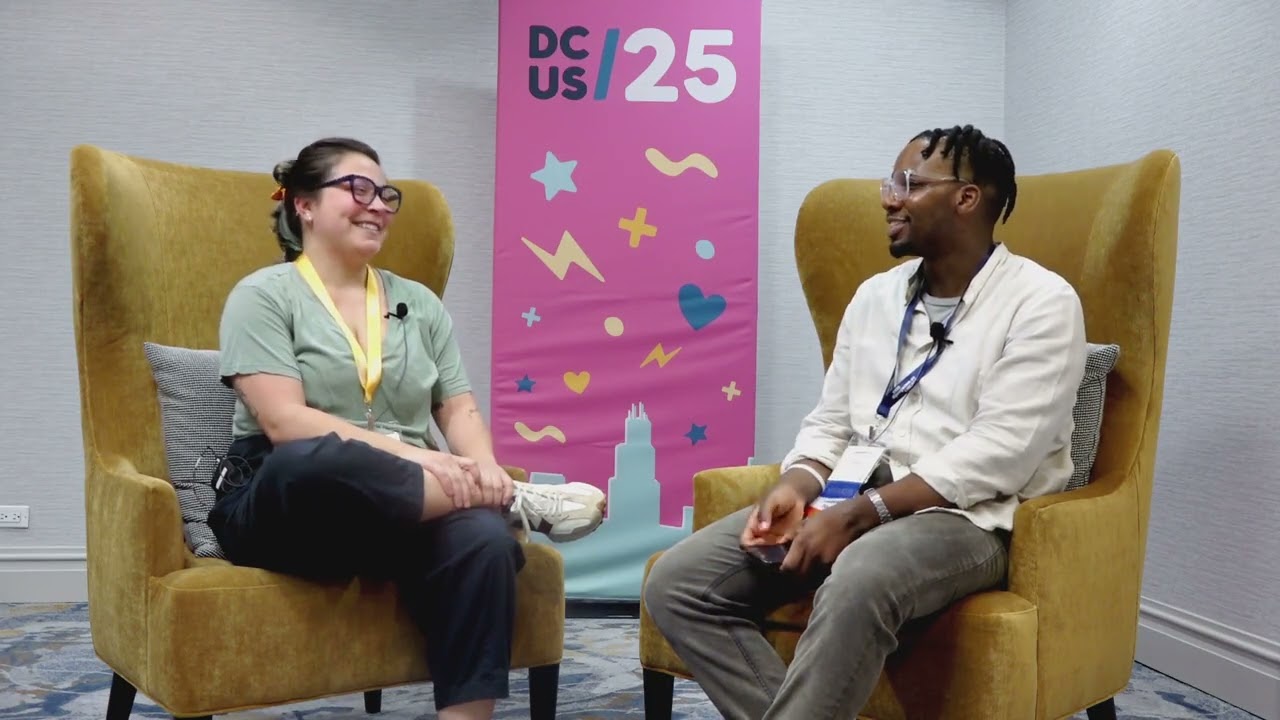
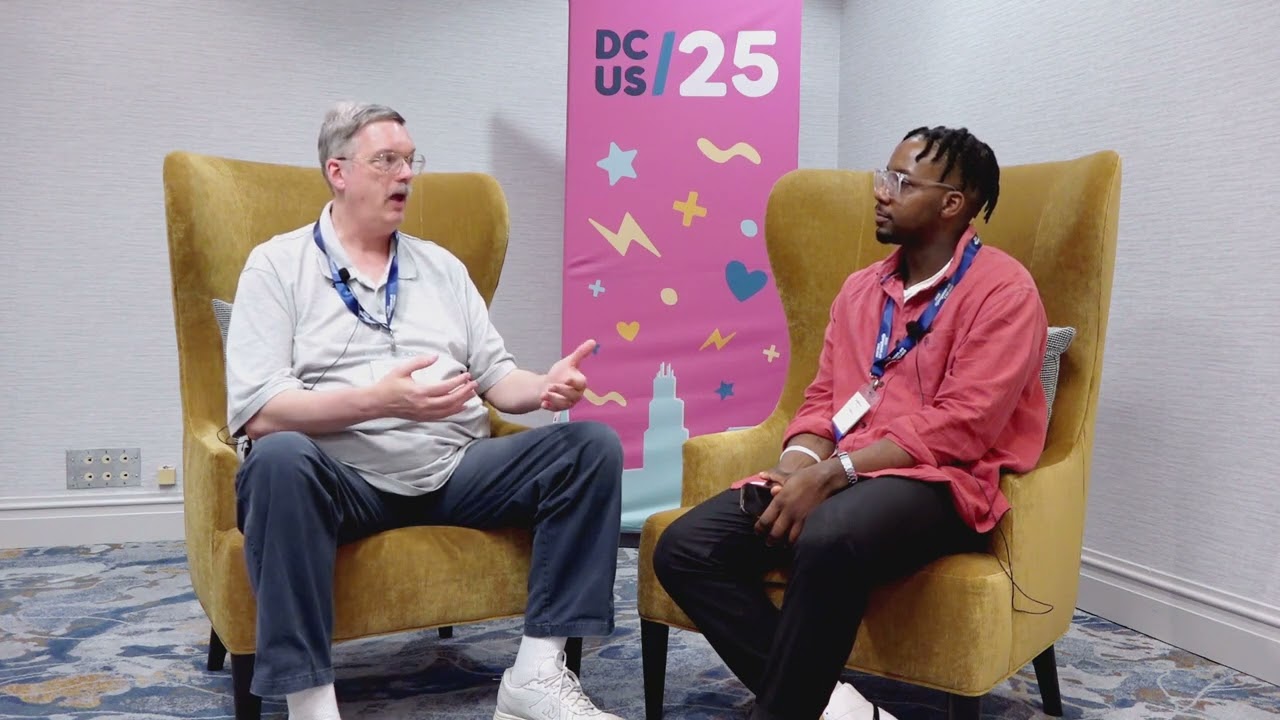
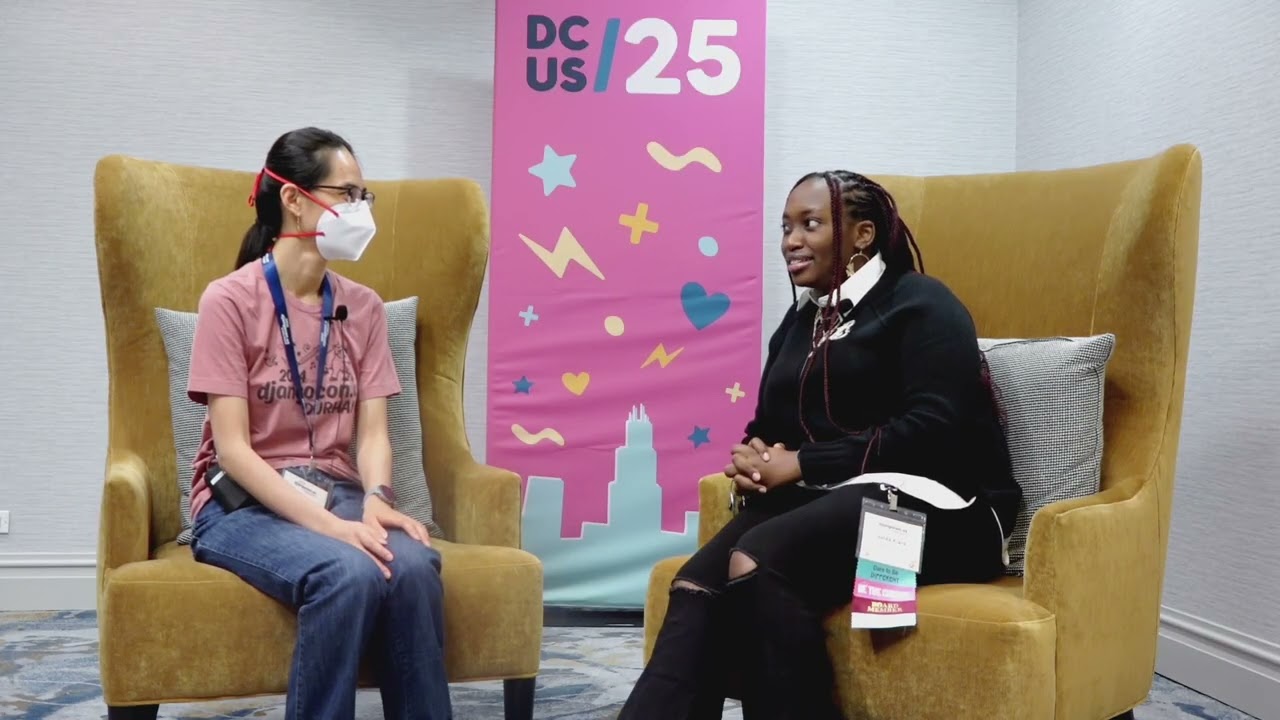
Creating an Inclusive Django Community with Kenya Phelps
Published July 15, 2026
DjangoCon US 2026
This video features Jessica Rose at DjangoCon US 2019 in San Diego, California, USA.

DjangoCon 2019 - Keynote: Burnout and Balance by Jessica Rose
TBD
This talk was presented at: https://2019.djangocon.us/talk/keynote-jessica-rose/
LINKS:
Follow Jessica Rose 👇
On Twitter: https://twitter.com/jesslynnrose
Follow DjangCon US 👇
https://twitter.com/djangocon
Follow DEFNA 👇
https://twitter.com/defnado
https://www.defna.org/
Intro music: "This Is How We Quirk It" by Avocado Junkie.
Video production by Confreaks TV.
Captions by White Coat Captioning.
Jessica Rose explains burnout as prolonged physical, mental, and emotional exhaustion that reduces both working memory and quality of life. Using cognitive load and working-memory examples, she shows how sleep, stress, and competing responsibilities change the mental capacity available each day, then offers practical recovery advice: reduce stressors, do less, say no, outsource or delegate, ask for help, rest, reconnect with meaningful activities, forgive yourself, and avoid lashing out. She argues that employers and managers have a responsibility to create sustainable working conditions, but individuals may still need to protect their own limits rather than wait for institutions to do so.
Summarised automatically from the transcript.
Automatically transcribed, so expect mistakes in names and technical terms.
Good morning everybody. Good morning. How are you all feeling today? For those of you watching the video later, I specifically asked for the hangover keynote. Everybody here looks like young and fresh and beautiful and alert. But I like this speaking slot because folks tend to be just a little more compliant. If you tell them like, hey, raise your hand, they're like, yes, make it stop. Uh so uh uh my name is Jessica Rose, and I've had a really, really great intro, and I'm absolutely delighted to be here with you all. all today. I'm based in the United Kingdom right now where everything is just fine. Thank you for asking Um for folks who may be watching the video much, much later, this is uh it's in September, it's 2019.
It was it was a weird year. And I do, I head up the Mozilla Tech Speaker Program. And this is a program that empowers and supports technical speakers who apply for it. And that sounds really fluffy. Empowers and supports sounds very much like a sham cherry. But what we actually do is that folks who apply to this program uh and who are accepted get five weeks of remote speaker training. And then when they speak about something that overlaps with Mozilla's mission, we help cover travel and hotel for them. Uh the applications for this aren't open yet, but I'm reasonably sure they'll open in November. And you might say, hey, Jess, because it's first thing in the morning, you've laughed at one of my jokes. We're on a first name basis.
You say, Jess, why are we even talking about burnout at a technology conference? We've just heard about contributing to the Django project, which is fantastic. We're gonna be talking about some really exciting technically hard-hitting things. Why specifically burnout and why now? And I'd say my argument is going to be that you're not going to be able to do cool things while you're burned out. And this may sound like, hey, you're not going to be able to do more productive work to support capitalism. And that's true. But I'm I'm l uh of course I would like for you to all to continue to get paid to um afford food and medical care, because that costs money here. Um
sorry. We we've got the NHS for like six more months. I shouldn't be smug. Um yes, you won't be able to do good work, but you won't be able to like enjoy your lives. I'd love for all of you, if you you take it well, I'll give you something else at the end, but like you're more than just your work, I hope. I'm not seeing any stony-faced managers, so I think we're good. And your quality of life genuinely matters. Before I got into technology, I worked as a teacher, and I am so dazzlingly excited by the human brain. Not the mind necessarily, but just your brain is a construct. It is like a little not that your brain is little tiny, like everyone's brains are smaller than you would hope.
Not let 's your brain, as everyone else's, is just a little tiny wet bag of meat. Drenched in chemicals. And this gives you everything you've ever been afraid of, everything you've ever loved, everything that you're worried about right now. That's just your brain being extremely weird and cool. And your brain is so, not that your brain is so small, but like one's brain is relatively small and much more delicate than you think it is. Before we get started, I'm going to talk to you very, very briefly about cognitive psychology. Has anybody ever heard of this before? Oh, this is like my audience for nerds. Fantastic. Uh for those of you watching on the video, everybody like did a triumphant fist pump into the sky.
They're not mic'd, but several people yelled cognitive psychology keywords. So I'm going to talk about two main concepts from cognitive psychology, which was very popular back in the sort of 60s, and it was sort of a new field of looking at the human brain and the human mind as though it was a computer. So these sort of computationally aligned processes are gonna sound pretty familiar. So working memory is just how much capacity your mind, your brain has for running processes right now. And that right now is really important because that changes. Whereas cognitive load is the total amount of mental effort being used now, how much of that working memory you have available right right now.
And that changes. You're not born day one and you have a perfect vessel of all the working memory you're gonna have. Your working memory changes depending on how young you are. Like kids are not that smart. Your kid is really smart. I've I'm sure they're doing really good at spelling. Like your personal child, brilliant, but other people's kids. There's a lot of parents in the crowd. But the amount of working memory you have doesn't just change on how old you are. It's gonna change day to day, hour to hour. Let's say you went to bed at 10, you got nine hours of sleep, you had a really healthy breakfast, you went running. We've got three different sizes of beaker. You might be that giant beaker up there.
I gave this talk in a hangover keynote once and when I got to the like nine hours of sleep, somebody went woo at the back Every other face turned around in anger. But maybe let's say you didn't get nine hours of sleep and eat a salad for breakfast. Maybe you were out by the pool drinking whatever local cocktail people drink And you're feeling a bit delicate today. You might be the little tiny beaker in them. You would never be the tiny beaker. You would clearly be the slightly smaller beaker. And that's really, really interesting, because we have a different amount of memory as it goes. And I've got sort of a weird demo for working memory. So let's say I am a small plastic cup today.
This is all I've got to work with. And I say, well, I'm giving a keynote right now, which is fine. That's That's a reasonable amount of my working memory taken up by this cognitive load. And I have just now wondered whether or not I've filed my British taxes. And that's super fine. I have like nine emails that are all marked critical. And I'm running a 50 person event in Amsterdam. Oh good, like tomorrow. That's fine. Oh no. So as you go all of these processes, all of your multi-threaded thinking is taking up more and more of the working memory.
that you have available for this day. The first time I gave this talk, I went ahead and did a full demo and overflowed this onto the stage, and I have been told to never do that again. So for the sake of everyone following me, we'll just imagine I made an absolute god-awful mess. I also did this with champagne once, which was fantastic. So okay, we've got the major keywords here. We've got like working memory, how much how big your plastic cup is today. And then you've got cognitive load, how much of that you filled with coffee or champagne as you do. And we're gonna be talking about the core of what we're looking at today, occupational burnout. Everybody ready to be real excited? Because this sucks.
Occupational burnout isn't new. We've been doing this for as long as we've been grinding people to dust through their work. Occupational burnout, I like it's a weird small laugh. You're like uh ha ha ha ha human misery Occupational burnout, and you know when when technically people say just and they don't mean just, occupational burnout is just exhaustion. Just It is physical, mental, and emotional exhaustion that feels inescapable and that's been going on for a protracted period of time. It is the result of long term, and your mileage may vary from long term. Some people can go ahead and soldier through that for years, which is great, I guess. And some people it could be weeks or months.
And the most exciting thing, just the best best thing about burnout is it can both cause, exacerbate, and mirror the symptoms of serious physical and mental illnesses. Yay! You say, okay, that's great, Jess. That's exactly what I wanted. 10 in the morning. Good for you. How about we go ahead and look at what detecting burnout might be like? And this is kind of a personal thing. This is like, hey, let's do, it's it's not a psychological concept, but it's psychologically aligned. So I'm not gonna say, hey, raise your hand if you're no, no, wait, oh how about could you just go ahead and give me a like stony, really done with everything
look If any of these are relevant, and go ahead and keep count to yourself. Um, hey, hey, hey. Are you a little bit over people? Like you're just kind of done with people, either at work or in your personal life, maybe both. I always think this one's a plant, because this this is everyone. Except for that one guy who'd got nine hours of sleep and ate a salad for breakfast. Are you just getting up in the morning, dragging yourself through work, and then having the toughest time engaging with the stuff once you're there? Are you real, real done with people? Maybe irritable with your coworkers? Maybe irritable with customers, really done with your clients.
I really don't like this question because we're back on sort of the late capitalism thing, but like, do you like the energy to consistently produce for the people who own your labor? Are you not having a super fun time? Are you not being able to see yourself in your own successes? You get something done and it's just a bit like, oh, to the next then. I'm really excited because earlier today I learned that somebody quit their job immediately after the last time I gave this talk. Uh please come see me after this if you do, but like are you kind of disillusioned about your job? You're like, wow, we make blue widgets. That's great. Are you using food, drugs, or alcohol to sort of
coast through to feel better or to feel less? Have your sleep habits or your appetites changed? And I think this one's just part of getting old, but like, does stuff hurt where it didn't used to hurt? I love this because there's always a 20-year-old who's like, what? What? Fantastic news, very, very exciting. These survey questions are actually from the Mayo Clinic Diagnostic survey on burnout. And you might be saying, oh, you know, I only got four of those. I I I I am kind of tired of people and blue widgets are okay, I guess. You're gonna be so excited to learn that if you've answered yes to one or more , Uh for those walking on the video, I
I'm not laughing at my own jokes. But somebody just let a a very nervous small laugh. Probably a sign that everything's fine. You say, Jess! Thank you so much for bringing this. One or these or more, and I may be suffering from occupational burnout. What a gift. You're welcome. Let's talk a little bit about recovery. And the first thing I'm gonna go ahead and do is sort of a very, very bold warning. I didn't do this in red, but imagine it's red. I am not your doctor I am not a doctor. I would probably tell you to walk off any kind of major ailment. I don't know what I'm doing. Please, if you f feel that you're being impacted even by burnout or by a s by a mental or physical ailment, please immediately talk to a real doctor.
I would just fill your pockets with candy and tell you to have a nice day. The one thing I'd warn you is that recovering from burnout is gonna take a really long time. Longer than you think it is. I wound up very profoundly burned out maybe in 2016 Which has just occurred to me that it was a very long time ago, and that's fine. And I'm mostly okay these days. Recovering from burnout is gonna take you longer than you think it will. I'm sorry And from here, we've got two different routes, sort of two different recovery routes. If you're the type of person who can afford to take a really significant time off of work , You're set. Like I I don't know what rich people do, like spend some more time with your horses or your boats
But you're gonna be like if you could afford to take a big chunk of time off of work, please take that time back and do whatever rich people do with their time. I genuinely don't know. Like cars, loud cars. But for those of us who can't load our horse onto a boat for a year or more of downtime. I also don't know about horses or boats. If you can't stop doing the things that are breaking you. Here are some things that might be helpful. Do less in ways that aren't going to destroy your life. And I think of this sort of as emotional energy triage If you like projects, I can't stop you from making a Trello board. Go ahead and list out all the things you have to do
and rank those by like what is going to destroy. You probably need to continue to pay your taxes I'm like for those based in the US, please continue to pay your health insurance. Probably continue to show up at your job. But like look at the things where if they don't get done now or they don't get done in the next six months, leave those alone. You probably don't have to paint your house. Right now. You don't have to mow your lawn until your neighbors complain. A lot of these things, a lot of homeowners, uh, a lot of these things are just gonna be fine if you leave them. Make sure that you're really selectively investing in these. Absolutely outsource where you can. If you've got a little bit of extra cash, but not like horses on a boat money. Um
see what you can go ahead and outsource either professionally or through bonds of human emotion. When I wound up really, really burned out, my beloved husband, who isn't here, so I guess I I don't have to say nice things about him. Did all of the holiday shopping one year. Get people who are there to support you, not in an exploitative, not in a terrible way, to help you a little bit more, either through fairly compensating them for their labor. Or hopefully through the human relationships you've carefully built up and will not torch while you're burned out. This one's my favorite one. Can I get everybody just to yell no? One, two, three. No! Hey! Start saying no. And I always chat to somebody after this to be like, oh, you know, I'm really burned out. Where it's like, yup, yup.
But I've got all these different things and I can't say no to any of them. Or it's like no, no. And I find folks who organize things and care for other people and do community work tend to have the hardest problem with this, where it's like, hey, say no. They're like, no, everything will fall apart. And I go ahead and warn you that , warn you, I'd gently encourage you. If you continue to stay burned out, if you continue to do too much. Eventually, most people are going to hit a wall where something not great happens. This could be a health crisis, this could be a mental health crisis, this could just be doing a table flip in the middle of the office. If you keep pushing for too long, something not great is gonna happen. And then you're not going to be able to help anyone.
By taking care of yourself and by taking this time back If you're very civic minded and you want to help other people, I'd strongly encourage you to sort of put on your own air mask before helping other people If the only way I can guilt you into taking a break is by saying, wow, you won't be able to help anybody if you break yourself. That's weird. See me after class. But that's true. And this one's absolutely my I can have two favorites. I love the saying no, it's fantastic. Say, hey, you want to help me move this weekend? Oh gosh, we're going out of town, can you dog sit? No. And the cool thing is you don't even need a special excuse. If I can give you a one-size-catch-all, it's uh that's not really gonna work for me
That sounds soft and gentle, and that's a hard no. It's alright. I also quite like selective emotional investment. And based on the mms and ahs where I said like kids aren't that smart, I'm guessing there's a lot of parents here. Does anybody know about like mom swears? Cool. Mom swears are where someone's very intentionally saying something, but you get a heck instead. And one thing I'd really love to hear to walk away with is you've only got so many hex in your life. Like pick them up, count them, say, well, I got six of these hex. And somebody's wrong on the internet.
But I got six. And people are definitely gonna be r wrong in real life. I'm gonna hold on to these. So really count the amount of emotional energy, the amount of engagement. Sounds very buzzfeedy. the amount of energy you have for these interactions and only pass them out where they're really important. You say, oh, I'm actually really burned out. I'm really tired. I have exactly three hex And I am not delivering them for this foolishness. You have a nice day, I'm out. They can be wrong by themselves. And one thing I'd really love to encourage you to do that I really see people having a problem with is ask for help. Say, hey I'm tired. I can't do this. I need a break. I need a couple days off after this conference. Everybody get a couple days off after this conference.
Take ask for help and ask for support where it's appropriate. And I'd really love to bully people to recharge. If you do have time to take that big chunk of time off, fantastic. If you don't, I'd love to gently, lovingly bully you. On the weekends, sign out of everything you can sign out of. Take some time and do the stuff that makes you feel connected to things again. It could be a needlessly complicated board game. All right. Oh, there's board game study, isn't there? Oh, uh, for those watching the video, uh, we there are no board games and there are no social events. You've missed nothing and it's rained all week. Read! I've I am firmly told that there are people who like exercise to recharge.
And if this is you, again, come see me after class because I would really like some tips on I guess lying to myself to to suggest I could ever be that kind of person. One thing I'd really, really love to encourage you to do is practice forgiveness. When you're burned out, you're not necessarily screwing more things up, but you're more hyper-aware of it. People mess stuff up all the time. And again, not you personally, the other people in your life clearly. If you are burned out, or even day-to-day, practice a lot of forgiveness, not oh God, I got up on stage and nobody laughed at that horse joke. It's gonna be it's probably statistically going to be okay. If you look at what's going on in your life, as long as you zoom in or out
just the right amount, everything's going to be mostly fine That's the most reassuring thing sounding thing I have that means nothing. Just go easy on yourself, especially while you're getting better. And this is the really big one. When I see people like super burned out, and the way I see them really trash their lives is you lash out, you're like, I'm tired, I'm mean, somebody's gonna pay. Don't do that. You're it's just a crappy thing to do, but it's also going to make your life much worse. Even if you don't like other people, or don't like other people right now, being a jerk doesn't help you either But naturally, this is Django Khan and everybody's a lovely person, right? Oh, all right. That was a very delayed hard maybe.
Like, yeah So just as a quick recap, to sort of recover from burnout, everything's fine. I'll just describe the slides as we go. To recover from burnout, big circle that says do less, you're going to need to do quite a bit less. You're gonna need to dramatically reduce your stressors wherever possible. And you're gonna need to go ahead and invest that energy selectively. Hey, I've got four hacks and you don't get one today. Good day. And you say, oh, but Jess , you know, you're you're talking to me about burnout and you're giving me a lot of like things I can do as an individual.
Yep, yep. You say, well, Jess. If a lot of this is occupational burnout, if people are getting burned out in their jobs, isn't it my boss's or their boss's job to make sure that they're not destroying me and not destroying us? And yeah. Yes, yes But I think waiting for someone else to take that responsibility to manage people in an ethical fashion or to balance your work-life balance for you. May not be something we can look forward to wholesale in 2019. It's absolutely their jobs. But that should is highlighted for a reason. Employees, managers, investors, and other decisions that just
they absolutely should be making. an effort to treat you in a way that's sustainable and that's not going to burn you out and they won't replace you with somebody else in 18 months. But should is a real tricky word So far this has been a really light fluffy keynote, right? I want to take you on a little tiny detour, like maybe There's a couple parts of burnout or the recovery process that might actually not be entirely rubbish. And I was At an event recently and I had an interaction that was great. It was so much fun. It was the best interaction.
I had made a polite excuse where I was like, oh hey, this is all really fun, but I'm I'm a little bit burned out. I'm gonna go away now But at this recent event, somebody I hadn't seen in ages came up to me and said, Jess! Because we were also on that first name basis, like, Jess! Oh my god, how are you? I didn't know you were pregnant. So i if I can give you a gift Well first off never do that, but that's you you knew that. From being a teacher, there's like a hard three-second stare that can lead anyone to question their life and their life choices
So Jess, I didn't know you were pregnant. Oh, I'm not. And bless this gentleman's little cotton socks, his tiny cotton socks. He was like, oh, but you know. And you can double up that three seconds. Like you can go six seconds, but you've got to commit. You've got to like not be able to blink for six. You've got to be ready to go. And before burnout, I like would have taken this as the worst day of the world. Like A, I would have to do a murder. It's it's manslaughter, it's fine. But I also would have doubted myself, oh
god, uh I mean maybe I'm I'm I'm getting older, maybe think I'm I'm I'm getting ready to have kids and like maybe maybe I put on some weight or like is it this dress? It is not this dr The stress has pockets. The stress is great. I could very easily see pre-burnout me spending maybe a night, maybe weird 3 a. m. moments for the next 60 year 40. 40 years popping awake at night to think about this. But post-burnout, it's great where you're like, oh, you're a moron. Cause I only packed three hex that day and I used one of them to get out of the event, be like, oh, I'm tired and I hate this good
day And it would have cost at least six to do a murder. There was nothing in my immediate vicinity. I had like a notebook and a phone. And it's not a clue episode. You can't do a lot with those. But like post-burnout, I had this much energy, which was just enough to put this in a talk where eventually this guy is gonna see this. And he gets to think about it at three in the morning for the next. How old is he? I mean hopefully not that many years. No, he's he's fine. I he's I left him alive So if nothing else, your brains are not yours
specific everybody's brain is small and gentle and easy to break, but Remarkably resilient and things, as long as you zoom in or out just the right amount, are probably gonna be mostly fine. Thank you so much.
Occupational burnout is prolonged physical, mental, and emotional exhaustion that feels inescapable. It can also cause, worsen, or resemble serious physical and mental health problems.
Discussed at 8:00Warning signs include feeling over people, struggling to engage with work, irritability, losing energy or satisfaction, feeling disillusioned, changes in sleep or appetite, using food or substances to cope, and unexplained physical pain. The speaker notes that even one of these signs may indicate burnout.
Discussed at 9:35Yes. The speaker emphasizes that she is not a doctor and recommends speaking promptly with a real doctor if burnout or another mental or physical condition is affecting you.
Discussed at 11:59Recovery usually takes longer than people expect, potentially much longer. The speaker describes her own recovery as taking years.
Discussed at 12:48Reduce your commitments and stressors wherever possible, prioritize only what truly needs doing, outsource tasks, say no, ask for help, and invest your limited emotional energy selectively. Time away from work, disconnection on weekends, restorative activities, self-forgiveness, and avoiding lashing out can also help.
Discussed at 13:34Employers and managers should treat people sustainably and protect them from being burned out, but the speaker cautions against waiting for organizations to take full responsibility. In the meantime, individuals may need to reduce their own stressors and protect their capacity.
Discussed at 22:01Note: We understand that names change, people change, and bodies change. We respect each individual's journey and privacy. If you have any concerns about a video or need us to remove content, please don't hesitate to contact us. We will handle your request with care and promptly address any issues.
Published July 15, 2026

Published July 15, 2026

Published July 15, 2026
Published July 15, 2026
Published July 15, 2026
Published July 14, 2026