0:48:35
State of Django Panel by Simon Willison
Published November 10, 2018
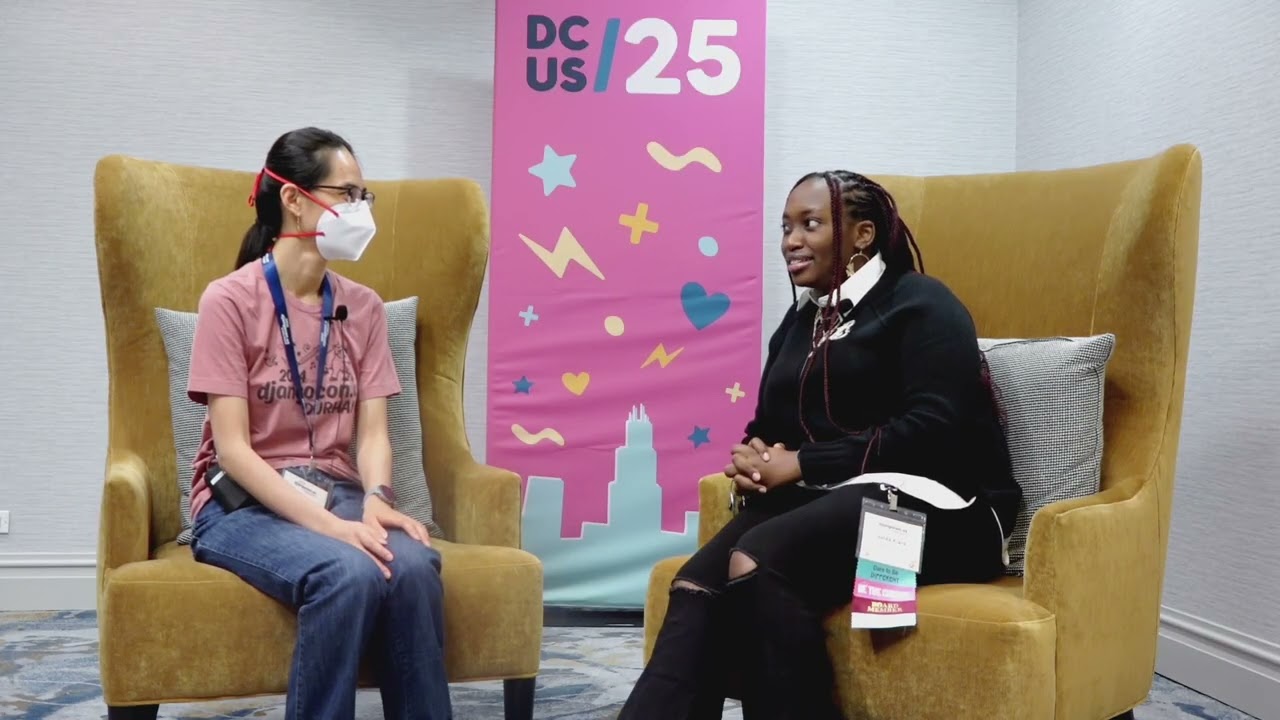
This video features Frank Wiles at DjangoCon US 2024 in Durham, North Carolina, USA.

We are better programmers than historians or archivists. There are a few great stories from the very early days of Django and how we managed to get it Open Sourced. They are told in the hallways and at dinner amongst us old timers, but as Django is poised to enter its second decade it seems appropriate to record some of these stories for posterity.
How did the make up of the team and The World Company itself impact early Django design choices?
The infamous meeting where we got approval to Open Source Django
Why the BSD license?
Did we know what we were doing?
This talk was presented at: https://2024.djangocon.us/talks/a-brief-history-of-django/
LINKS:
Follow Frank Wiles 👇
On Mastodon: https://frankwiles.social/@frank
On X: https://x.com/fwiles
Website: https://www.revsys.com
Follow DjangoCon US 👇
https://fosstodon.org/@djangocon
https://x.com/djangocon
Follow DEFNA 👇
https://www.defna.org/
Video production by Confreaks
Follow Confreaks 👇
https://confreaks.com
https://x.com/confreaks
Django grew out of the World Company, a newspaper and technology business in Lawrence, Kansas. Adrian Holovaty, Simon Willison, and Jacob Kaplan-Moss built a Python replacement for the company’s Perl CMS in 2003–04, extracted Django from it, and persuaded the company to open-source the framework in 2005; its practical admin, ORM, caching, documentation, and early design work helped it gain users. Frank Wiles traces the community’s development through the Django Software Foundation, the first DjangoCon, Django Girls, the Code of Conduct, and the move away from BDFL leadership, arguing that Django’s longevity depends less on historical accidents than on the people who maintain its technical standards, friendliness, and inclusivity.
Summarised automatically from the transcript.
Automatically transcribed, so expect mistakes in names and technical terms.
Thanks everybody. Unfortunately, I really needed my slides and my speaker notes because this is a lot of fun pictures and a lot of dates. To quote the recently deceased James Earl Jones's Oscar acceptance speech, ladies and gentlemen, I stand before you deeply honored, mighty grateful, and just plain gobsmacked. Do you realize how unlikely it is that we're all here today? 19 years later? Let me tell you a little bit about how it happened. Our story begins in 1891 when Wilford Collins Simons took over the Lawrence Record, thus beginning the 125-year ownership of the newspaper by the Simons family. who finally sold the newspaper business in 2016.
This is actually a 2013 represent reproduction of the 150th anniversary of Quantrill's raid. as evidenced by the barcode in the upper right hand corner that I just realized you can't see on screen. But barcodes wouldn't be invented for 89 years later, and so that kind of gave that away. Don't be scared that I'm starting 133 years ago. We're gonna quickly jump forward to the 1970s. Lawrence is a hippie little Town in an otherwise fairly conservative Kansas. And during the Vietnam era, student protesters set fire to the Kansas Union and set off a bomb in the computer center. Why is this important? Well, it's a computer lab. But really it's important because the day the bomb went off was the second day of employment for a man named Ralph Gage
at the Lawrence Journal World. He'll become super important to our story here in a little bit. But I love the little caption here, mangled paper boxes may have saved lives, so which begs the question, maybe we need to reconsider punch cards 1972. The Simons grew their media empire in 1972 by launching Sunflower Cable Vision, an early cable TV provider. Sunfire went on to be the first uh system west of the Mississippi River to have HBO. Um and we were the second city in the U. S. to have cable motors. We were named Independent Operator of the Year in 2003 and we helped craft the video on demand standards. And we were the first beta testers and the very first
people to use in production the DOXIS Cable modem standard that you all use today. We also had Geeks on Wheels, an on-demand at-home computer service and repair business that was years before Best Buy's Geek Squad existed. And then the Lawrence Journal World itself was one of the first 50 newspapers to go online. I'm giving you all this backstory to help set the stage for how a small newspaper in Kansas ended up building and releasing the little web framework we've all grown to love named Django. Let's flash forward a little bit more. So this is a kind of a lie because Django actually started years before in 2003 when Adrian and Simon started working on a Python-based replacement for the Perl CMS I had helped build.
Their new creation was called the CMS. This photo is from 1911. It's the old post office for Lawrence, Kansas, which was acquired by the World Company and turned into the Converged Newsrooms. which housed the newspaper staff, Six News TV staff, and World Online, which is where Adrian, Simon, and Jacob worked. If you look at the bottom left here, just in front of the horse, you'll barely see the top of a basement window. Let me help you out a little bit. This is where Django was born. Incidentally, this is directly across the street from the coffee shop that Jeff Triplett and I go to basically every day still.
Let's go backwards just a little bit and dig more deeply into the details around the early years of Django 's history. During 2003 to 2004 is the pre-period, I guess. So due to a bunch of not very interesting reorganizations and staff departures. There was about a six-month period of time where I was basically the only geek in the world company. So I was having to try to push the cable ISP forward and keep the lights on at World Online. Luckily, I was 20 years younger, and because now the lack of sleep might actually kill me. I mentioned it briefly before, but Java Break, the coffee shop across the street, which was open 24 hours a day back then. uh certainly played a minor role in the success of the technology at the World Company.
Thankfully for me and Django's history, Adrian Holavadi came along and took over World Online. He then hired Simon to assist, and Simon was able to come over on a one-year student visa for an internship. And Simon's help went so well that when it was time for Simon to leave, They hired Jacob to replace him, but they overlapped by a couple of months. Together, they replaced our old Perl CMS and a couple of PHP websites with their new system, the CMS. And Django was extracted from this CMS, much like how Rails was extracted out of Basecamp. Okay, we're back to 2005. The official year of Django's birth, but 2005 may be a fuzzy childhood memory for some of you.
So I want to kind of remind you what the landscape was in 2005. Yahoo was much bigger than Google. MySpace was the dominant social network. AOL was still a thing. The iPhone wouldn't be released for two more years. Slashdot was the main source of tech news. Hacker news wouldn't launch for two more years. Git was released three months before Django. It was the time of Python 2. 4. Postgres version 8 was out, but most everybody used MySQL. The PSF was four years old. PyCon that year was 450 people. Gmail came out the year before.
Most of the web ran on Perl. And JavaScript frameworks didn't even exist. After several failed naming attempts, uh one of which was uh uh private dancer, just horrible, horrible naming choices. After several failed names attempts, they extracted Django and named it Django after Adrian's love of jazz. After Django was extracted, the remaining CMS bits that were left over needed a name, and it was eventually named Ellington in reference to Duke Ellington. The world company realized they had a state-of-the-art content management system on their hands, and they wanted to sell it to other newspapers to make some extra revenue for sure.
But there was absolutely a deep desire from the Simons family on down through the organization to improve, grow, and as time went on, attempt to save journalism. It was obvious to us that newspapers needed to make some sort of online transition, if not primarily online, in the coming years. While they were also a small regional paper, they had big impact in the journalism world. Dolph Simons Jr. um, who is the oldest Simons family member that uh any of us ever met, uh served as director of the Associated Press for a decade. He was a jur juror on the Peel Witzer Prize uh and on in lesser organizations like the Kansas Press Association. Both uh Dolph and uh Ralph Gage, that I mentioned earlier, were lifetime trustees of the William Allen White Foundation, whose mission is to strengthen freedom of the press, free speech, and communication.
Ellington still exists, by the way. It was later acquired by ePublishing and is still in active use today. And if you squint, you may notice some deep similarities to the Django admin. Around this time, Adrian and Jacob got the bright idea to open source Django because Rails had come out recently, and the buzz around that year's PyCon was: what would Python's answer be for Rails? The World Company had a long history of using open source software. Their previous CMS was written in Perl. The cable ISP simply wouldn't have been profitable if we had had to use commercial Unix. But the problem was it was scary for businesses to open source software at that time. It wasn't exactly rare, but it was not at all common They didn't understand the technology, the legal standing of various licenses
were weird and somewhat untested. It's hard to get a hundred-year-old company to do scary things they don't understand. So, Jacob and Adrian asked me if I would come help argue in defense of open sourcing Django. As a longtime open source user and contributor, I was happy to. But you have to realize at this point, I didn't use Django or even Python. I was just a I was still a diehard fan of Pearl. But I had a stronger relationship with the Simons, and I was fluent in lawyer and suitspeak. So, we had the infamous lawyer meeting. The exact dates lost to history. I seem to remember it being a Thursday morning. Jacob says he didn't remember that. I was probably a little hungover. For me, it was just another meeting and an otherwise crazy week jumping between newspaper problems, cable problems, satellite TV problems, and ISP problems.
I had no idea this was a pivotal moment in my career. Or in your careers. We reintroduced the reporter from that 1970 bombing story, Ralph Gage. Ralph started off as reporter just before the bombing and worked his way up to editor and eventually CEO of the World Company. He was the best worst boss I ever had. Ralph often said that Tim O'Brien of the New York Times may have written his epitaph saying, a no-nonsense taskmaster deputized to make sure the company's trains ran on time. I can still hear his gravelly voice calling me on the phone to say, god damn it, Frank, whenever a website or email wasn't working correctly. He would appreciate this. If Adrian and Simon and Jacob are Django's parents, Ralph's its
grandpa. There were concerns. The main legal concern Ralph and Simons had were open sourcing. Would blow back on the company in some way, right? That it would somehow tarnish their reputation, or that it somehow, the viral nature of open source languages, would compromise their big business with Ellington So we argue that if Django ordered successful, they would reap the benefits of existing contributions. And I I quickly realized that one of the ways to sell them was that they had built this amazing house And we weren't giving away the house, we were giving away the improved circular saws and nail guns that they had used to build the house. And that sort of resonated with them.
And basically, It boiled down to Ralph trusted us. He said, you all have led us correctly in terms of technology. I assume that you all will lead us correctly in terms of the company. Weirdly enough, the bulk of the meeting was spent on arguing GPL versus BSD. I won't go into too much detail because I'm running a little low on time and I want to get to some more important parts. But to say Django was well received is a bit of an understatement. Adrian Soft launched Django at Chippy, the Chicago Python user group. um a week before it was supposed to really go out. And they actually, somebody named Hugo actually put in a full SQLite implementation before the actual launch date. There were some other key decisions in terms of what I think was important in Django's history.
Um, Django had a cheat code to success. It may well have been that web designers were involved from a very early time. People like Wilson Minor, who went on to do Apple and RDO and EveryBlock, and eventually a senior designer at Facebook, was instrumental in designing the website and the admin, the look and feel. uh and and having nice pleasant documentation. There was also Nathan Bohr who came after him and also went on to be a senior designer. Jay, go ahead then. Because of the close the tight coupling of the ORM with the admin, uh this was a major selling point of Django. The documentation. Adrian had a journalism background. Jacob's degree is in literature. Simon, we all know is a prolific author on his blog.
But they Jacob tells me that the strongest influence here was actually Carl Fogel's book on producing open source software. And he had a big emphasis on having good documentation to grow a good community. Some features in Django came out of necessity. The journal world was fairly popular as a website, and it things would get slow. And you have to remember we didn't have clouds back then. The only clouds we had sometimes had tornadoes in them. So Adrian said, hey, what can you do to improve the performance here? And I said, have you guys heard about memcachd? And the cache framework came out of that. People wonder why Postgres has a bit of a slant towards, or sorry, Django has a bit of a slant towards Postgres QL.
Adrian and team were big fans of MySQL, and I was a big fan of Postgres. But this is MySQL three days. And it occasionally would just randomly corrupt its tables and you would lose a little bit of data. And um that has all since been solved. MySQL is a fine choice these days. But uh finally after a couple of those, Adrian said, what would be involved in us switching over to Postgres? Uh and so we we helped and we did that. Flash forward a bit more, 2008. In another forward-looking decision by Ralph and the Simons, they agreed to put all of Django's intellectual property in the Django Software Foundation The main, you know, there's lots of good reasons to do this, but the main reason for them was competitive, they wanted companies to other competitive newspapers
to use Django to build interesting sites. And there was some concern by those newspapers that having the journal world control Django meant that they probably shouldn't use it, which is weird because they wanted to purchase Ellington, but when it was open source, somehow that got murky for them. Now, this also was not super common at the time. You have to remember, at this point, all I could find was the Apache, the Perl, and the Python software foundations that existed when this happened. And this is where my personal involvement with Django actually starts. I went from being, I'm friends with those folks, to being part of the community entirely by accident. Uh Jacob had left the World Company to be CTO at Whiskey Media, and I had left to do Perl and Postgres consulting at Repsys.
Turns out Jacob had trouble focusing at home and wanted to share an office. So we shared an office. And our friend Ricky Ensley said, Would you write an article? about the creation of the DSF and a brief tutorial on Django. And I said sure. And then I said, crap, I have to learn Python. And turned out that Django was way better than the Pearl MVC framework that I had helped build across the street named Gantry. Yes, the world company had dueling open source web frameworks there at one point. But it shouldn't be all that surprising. This came out of Lawrence. Lawrence has a pretty deep hist uh history and technology. Lawrence is home for Lynx, the very first text-based web browser.
It's also the home for publications like CC Users Journal, Sysadmin Magazine, and Dr. Dobbs, if anyone here is old enough to remember those. Or hell, and magazines in general. Do any of you remember magazines? Um Ricky worked on all of those and lived in Lawrence, which is why Linux Pro Magazine's office was just a block down the street from us. 2008, first DjangoCon at Google. Google actually offered to do this. It was their idea, and it was keynoted by none other than Guido himself. If you want to see some younger versions of some of the people in this room, you should go check out those videos. They're quite a bit of fun. Going back to Django's journalism roots, 2009, PolitiFact won the Pulitzer Prize. They said
that this was proof that the web is not a death sentence for newspapers. In fact, Flittifact marries the power of old-fashioned shoe-weather journalism with an extraordinarily powerful way to present it. I don't know how well that that aged in terms of newspapers still being alive, but the editor of the Knoxville Sentinel wrote at this, this is the most unusual and most important Pewitt surprise this year. 2010, Daniel Lindsley created something called Django Dash, which was a weekend hackathon to build something cool in Django. Well, one of the winners of that was Read the Docs. Read the Docs started by Eric Holster, and uh who still runs it full-time to this day, and we all probably have referred to some documentation, perhaps even today
But also was Bobby Kellogg, another designer who went on to design Trello. We'd all be very remiss to not mention Malcolm Trudenic. who died in March 2013 and was one of the most instrumental early contributors to Django, both in terms of why writing large portions of the ORM And also for his mentorship, we still have the Malcolm Tradenic Award to this day. And as the blog post here says, many of the Core Django team had their first patches reviewed by him. His mentorship enriched us. His consideration, patience, and dedication will always be an inspiration to us. To say he'll be missed is an understatement. You can still to this day stumble individu into individual Django source files where Malcolm was the last commit and the main
and and many where he had the most commits. Back to happier things. July 2013, we adopt the code of conduct. We weren't the first to do this, but we were definitely joining a small group of open source communities that have this. 2014, Adrian and Jacob stepped down as BDFLs. The community was already ahead of them of this. They weren't exactly checked out, but they didn't really need to get involved. We were making consensus decisions already. I tried to find evidence of any other BDFL stepping down from an open source community, and I couldn't find any. So they very well may be the first ones to do it. I mean Guido did afterwards, but I couldn't find any evidence before that. 2014, Django Girls, the OLAS, as they're affectionately known, held the first Django Girls workshop, which kicked off Django Girls, during the EuroPython 2014 in Berlin.
2014 was a busy year for Django. It was also the year the Django Fellowship officially started. 2015, when Chango turned 10, we decided sorry, we decided to throw a little birthday party in Lawrence, fit for a 10-year-old. We got permission from the city to close down a block and have a block party, including a birthday cake, a talking robot, and a bouncy house. And of course, Adrian flew into town to play us some sweet gypsy jazz. While I think celebrating 10 years is important to note in our history, I have to admit, I've mostly included this for this next picture. where I let Simon know that the Batmobile had just arrived on scene.
It's a replica, but yeah, it lives in Lawrence and we see it around town occasionally 2015 to today. This bit of Django history is fresh and far better documented. Many of you have lived it yourself, and I'm kind of running low on time, so I'm gonna skip that portion of our history and talk about the future a little bit. As I've hopefully shown, Django's success is partly due to right place and right time, but mostly due to the amazing people who've gathered around it over the years. We are what we protect and what we stand up for. I implore you to keep up our high standards, our code and docs for sure, but also a little bit of whimsy, but mostly of our friendliness and inclusivity. I'm sure you notice that the early history of Django is filled with a lot of white dudes from America.
As I look out over this room, I'm very heartened to see that we have made serious progress. in that vein, but we can do more. So with that, here's to another 20 years of Django. Now go eat your lunch. Because
Django grew out of a Python-based replacement for the World Company’s Perl CMS, built by Adrian Holovaty, Simon Willison, and Jacob Kaplan-Moss in 2003–04. It was extracted from that CMS and officially released as Django in 2005.
Discussed at 5:04After several rejected names, the framework was named Django because of Adrian Holovaty’s love of jazz, specifically the guitarist Django Reinhardt. The remaining CMS was later named Ellington after Duke Ellington.
Discussed at 6:37The team wanted Python’s answer to Rails and believed the World Company could benefit from outside contributions and adoption. They persuaded the company that it was giving away the tools used to build its products, not the products themselves, and Ralph Gage ultimately trusted the team’s judgment.
Discussed at 10:32Early involvement from web designers helped give Django a polished admin, website, and documentation. Its tightly coupled ORM and admin were a major selling point, while strong documentation and an emphasis on building a community helped it grow.
Discussed at 12:09Django’s PostgreSQL preference came partly from the World Company’s experience with MySQL 3, which occasionally corrupted tables and lost data. After repeated problems, the team switched the company’s systems to PostgreSQL, although the talk notes that MySQL is a sound choice today.
Discussed at 13:41In 2008, the World Company transferred Django’s intellectual property to the Django Software Foundation so competing newspapers would feel comfortable using it. Keeping control with the Journal-World might have made those potential users hesitate to adopt Django.
Discussed at 14:27Note: We understand that names change, people change, and bodies change. We respect each individual's journey and privacy. If you have any concerns about a video or need us to remove content, please don't hesitate to contact us. We will handle your request with care and promptly address any issues.

Published July 15, 2026

Published July 15, 2026

Published July 15, 2026
Published July 15, 2026
Published July 15, 2026
Published July 14, 2026