0:42:14
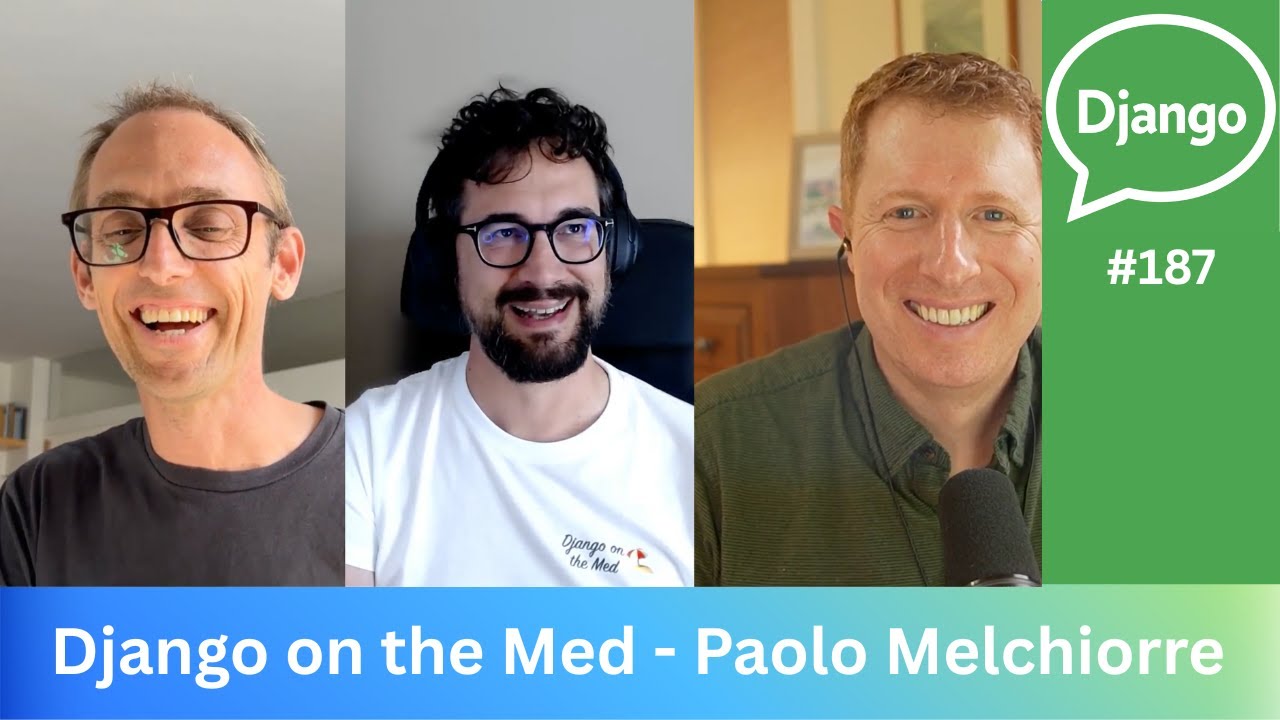
Django on the Med with Paolo Melchiorre
Published October 20, 2025
This video features Afi Maame Dufie, Carlton Gibson, Keanya Phelps, Lacey Henschel, Sarah Boyce and Velda Kiara at DjangoCon US 2024 in Durham, North Carolina, USA.

Panel Discussion: Open, friendly, and welcoming: on the history and future of mentoring in Django with Lacey Henschel
Lacey Henschel will moderate a panel discussion on the history and future of communities within the Django community.
We'll explore how mentoring, community involvement, and support networks are important in keeping Django resilient. By highlighting the work of groups like Django Girls, PyLadies, Djangonaut Space, and Black Python Devs, we’ll see how these initiatives not only foster personal growth but also play a vital role in keeping the Django community strong and sustainable for the long term.
We’ll discuss:
Panelists' unique journeys in the Django community
The role of mentorship, sponsorship, and advocacy in these communities and in Django's future
Successes and challenges in building supportive, sustainable communities
How the Django community can keep investing in long-term success
Our panelists include:
Lacey Henschel, moderator, former Django Girls contributor and organizer
Keanya Phelps, Django Girls organizer and participant, mentor in Djangonaut Space
Afi Maame Dufie, involved in Django Girls, PyLadies, and Black Python Devs
Sarah Boyce, Django Fellow, co-founder and mentor in Djangonaut Space
Carlton Gibson, former Django Fellow, mentor in Djangonaut Space, mentor and coordinator of Django's efforts in Google Summer of Code, and Django Girls coach and advisory board member.
Velda Kiara, DEFNA director, former AnitaB.org Kenya Community Lead, former Open Source Community Africa Nairobi organizer and contributor, participant in Djangonaut Space, and current contributor and leader of Black Python Devs
Join us as we reflect, explore, and hopefully inspire even more excitement and support for our broader Django communities.
This talk was presented at: https://2024.djangocon.us/talks/panel-discussion-mentoring-django/
LINKS:
Follow Lacey Henschel 👇
On Mastodon: https://hachyderm.io/@lacey
Website: http://laceyhenschel.com/
Django Girls, Djangonaut Space, Black Python Devs and other community groups help people enter open source, learn Django and Python, find jobs, and grow into mentors and leaders. Panelists emphasized that mentorship need not be a formal long-term arrangement: guidance can come through collaboration, asking questions, and learning from others’ work. They also described persistent challenges—too few volunteer mentors, limited funding and reach, and the need to make programs sustainable—while urging organizers to collaborate, welcome diverse participants, and build in shared responsibility so people can take breaks without guilt.
Summarised automatically from the transcript.
Automatically transcribed, so expect mistakes in names and technical terms.
Speaker 1: Good afternoon, everyone. I'm really excited to be moderating this panel so that we can all learn about the amazing work that's going on in communities all over the world. helping spread the word about Django and get people involved. Before we get started, I want to let our panelists introduce themselves. If you could just tell us your name, how you got into Django and the organizations that you work with. And we'll start with the person closest to me. Sarah, take it away.
Speaker 2: So hello, um my name's Sarah Boyce. I'm a Django fellow. Um I first got into Django um uh like I transitioned while I was um in my first job into tech. Uh Django was uh really the first thing I used and uh uh I loved it and I haven't really ever seen the need to use anything else. And yeah, since then I've been involved in the community. doing things such as Djangonaut Space and contributing to Django and that's yeah that's really me.
Speaker 3: That's great. Hi everyone. My name is Abigail Afi Berago, but I'm mostly known as Afi. So uh I'm a software engineer. I got introduced into Django uh through a Django Girls event in Accra, Ghana. So yeah, that's how I got into it. I actually don't use Django now, but I'm still active in the community. So
Speaker 4: yeah. Um my name is it's all yeah. My name is Velda and I am a software engineer and a technical writer and I still contribute to a whole lot of Python open source projects. I got introduced to Django through exploring in Python. I was really interested in wanting to know how I could use Python and I met Django and I've never left since. And other communities that I have been involved with are like open source community Africa and now the general Django community.
Speaker 5: My name is Kenya Phelps. I got into Django. My job uses a Django. I work for Cactus or a Django shop. Um and I was in the first session of Djangonauts as a Jjangle Knot. And thank you. And also the second session as a uh captain, hope to be yes, hope hope to be a navigator one day. And um I other I organized a Django Girl event this year um and I can ri I'm praying to bring Django girls and Django Khan to Chicago. I'm a proud Chicagoan.
Speaker 5: Just a a shameless plug there. All right. All right. So thank you.
Speaker 6: Hi. Um, so I'm Carlton. Um I got into Django, I can't even remember why or when. But a while back. I I'm on here on stage I guess because when I was fellowing I was um responsible for coordinating our Google Summer of Code um aspects. I've um also coached for Django Girls and I'm a member of the Django Girls Advisory Board. as well as in the last Django Nauts I was a navigator for that program.
Speaker 1: We've mentioned um a few organizations here today. We've mentioned Django Girls, we've mentioned um Django Not Space. I know several of you also work with Black Python devs. Some of those are newer organizations. So just for the benefit of those of us that might not be as familiar, can someone just kind of let me know what your organizations do? What is your mission?
Speaker 5: I could take a stab at Django Knot. So it was my first introduction to open source. um Django and Django and company could be a little intimidating for newer developers and you wanna you wanna contribute to the community and you you don't know where to begin. I I'm gonna tell you where to begin, jingle knots. Because because that community, like, they had me feeling like I could go into the cactus office and tell Colin and Tobias that look I'm your new CTO okay I mean not accurate but that's how I felt because there was so much Um just so many people out there to help you with your code,
Speaker 5: asking quite the community just really brings you in. And you don't think that you if if you're getting mentored You can also mentor. Like that was one of my limits, I thought, okay, I like I'm I'm actively getting mentored. How can I mentor somebody? And you br everybody brings their own set of beautiful things about themselves. And I did find some way to help others in and jangle nut. So that that's to I mean that's high level. But it's it's way more than that. But that was just my experience. So I'll pass it over to
Speaker 4: Well yeah, I have been involved with both Jinganax Space and Black Python device. So Black Python devs is more of extending the Python community to people who identify as black or colored. And what we're focusing on is generally on every black person or any person who identif identifies as black who also writes Python. So whether it's for the web or whether it's data science or whether it's also in terms of documentation and design as well. I have the benefit of being in both groups and just plugging those open source programs. They also take donations so please visit the
Speaker 4: pages.
Speaker 1: So if your finances allow, get your wallets ready.
Speaker 4: Yeah.
Speaker 1: Um, I've really enjoyed hearing all of you tell your personal stories and and how your story of how you got into Django began with some of the communities that you're now involved in. Can you tell us about some of the impact that these organizations have had on the communities where you live and where you um or I say live geograph geographically but also live in that online space, you know the the impact that those those organizations have had in your world
Speaker 6: Well I I can tell Django Girls is um nearly a hundred thousand people have gone through the Django Girls workshop, right? And I look around the audience here and it's not just a wall of men. It's diverse. And Django Girls is a big contributor to that. It's done a massive thing.
Speaker 3: Yeah, uh just to add to that, aside from it being diverse, it's given a lot of people from where I'm from uh the opportunity to really understand and be part of the ecosystem and also get jobs because you need to have the skill and most people um get jobs and they always reference Django girls events as like a starting point. as a way to get into Django. So yeah. Even for me. So yes, for me, I forgot that.
Speaker 1: I want to talk about mentorship for a moment because this is a panel about the sort of history and also future of mentorship in our community. And I know that a lot of what you all do in your communities is mentorship, but I want to flip that and think about your own mentors. As you are are leaders in your communities and become leaders in your communities. Do you feel that you have adequate support and mentorship to fulfill your own missions?
Speaker 5: Well, I could take a stab at that. Um uh I do, and I'm very thankful and grateful. I work with some pretty awesome brilliant generous developers. I also but they're also they when I say generous they always have time to go over you know things that I don't understand, concepts, new technologies That's my day job. And then the things that I like to do on the side, I've found that um the Django community is not performative. Like if they say that they're going to actually I'll get back to you. Let me see if I can look into it. I haven't had a situation where I felt like, okay, yeah, maybe I shouldn't have asked that question.
Speaker 5: So personally, the mentorship has been um it has exceeded my expectations. I who would have thought, like, you know, people think that, okay um programmers, computer scientists, data scientists, they don't want to talk to people. They don't want, you know, I mean, I take that back. That's what I thought. I don't think that anymore. Because and but it's because of this community. So I I I love the mentorship.
Speaker 2: Um so Yeah, I think mentor is is like quite a um quite a particular word. Uh there are not many people who have specifically gone, oh I am your mentor and all this kind of stuff However, there are many members of this community that I admire and I learn from and to enrich my life and experience. and that I have the privilege to collaborate with in fantastic things such as Django Nut Space, but also working on the Janga project So yeah, I do think that we have a really warm and inclusive community who
Speaker 2: has a wealth of knowledge who is generally very happy to share it. So yeah.
Speaker 3: Anyone else? Um so yeah, so on my end, I would just say that uh It may not be with a label mentorship, but there are a lot of people who are always there to guide me, especially when I need help, not just technically, but non-technically. So with both community and then with code they're always people to provide guidance with errors and also with community things so it's there help and help Yeah. And also I also get people to work with. Yeah, who also mentor me because there's certain decisions that I have not probably seen or I need guidance or advice on. And there are always people to ask and get like insights into the right things to do because I haven't yet been through that before.
Speaker 3: So yeah
Speaker 4: One of the things I had to learn, as Sarah said, is that mentoring can come in any shape or form. When I used to hear about mentoring, I used to think, oh, it's meeting someone consistently over a time span, a period. And then when they're bored like that's it um like yeah and when i started growing into the community and also as a professional I realized that Nobody really likes the term mentoring because it comes with commitment and not people have their own lives going on and saying that they want to commit to you and not our th other things is like also asking like a huge time from them, which I felt bad for
Speaker 4: because I mean if if I let you down, I'm not just letting you down, but I'm also letting your time down And that was so hard for me to like carry on. And most of the times, what I wanted to do or be involved with, I couldn't see it around the people around me. So I had to look online and see who who's available. But then it wasn't just for meeting people, but you could also get some form of mentorship through people's works where you could read something that someone wrote and I was and you could be like, oh, I relate to this. I can learn this and that from it. And the good thing about this community is people are so open to questions. So you could just go into someone's LinkedIn
Speaker 4: or Mastodon or Twitter and ask them questions and that in itself is also some form of mentoring because it's like, hi, I have this question, would you help me? And it's not like demanding any time from you. but it's also giving you time and room to respond as you see fit. And you might like message a lot of people and not get messages back and that's okay. I learned to live with that because not everybody also reads their messages. So it's just getting the answers that you need when you need them. And if you don't get them, there is a whole web search for all the things that you like to do. Yeah.
Speaker 1: We've we've kept the discussion pretty positive up to this point, but Belda, I was happy to hear you bring up some challenges because that leads into my next question about challenges. Um I know that some of the organizations that you work with are relatively new and I know that getting a new organization off the ground, letting people know about it. recruiting people to help you doing all of that work that comes with challenges and I would like um I would like y'all to talk about that
Speaker 3: Uh so uh I I I don't even know where to start. There are so many things like wow I just realized that uh handling people isn't as easy as it seems. Uh that's number one. Uh number two, I said this at the Black Python Dev Summit, the leadership summit that Sometimes based on how we are and how we want things to be, we plan. For some of us who plan to the little like tiniest detail, we want things to fall into place like in a synchronized order. But life doesn't play out that way. So you have to be um you have to have people who always give you the reality check
Speaker 3: that, hey Affi, this thing you're planning, just know that um like low lower your expectations because things could go wrong. So with regards to the planning, things could go wrong, um getting people together, also you want to look at statistics because when you put out something or when you are like starting a new group right like an open source group and you need like outcome or progress sometimes the numbers may not be that good maybe your expectations may not be met. So that there are various problems that I have encountered so far. There's like a generalized because I could go on and on and yeah I'll just leave like this.
Speaker 6: One issue that we've had consistently in the Django Org for Google Summer Code over the years is getting the number of mentors to match the demand for mentees. And all I can do is advertise that now. Is that if you're sat there thinking, oh, do you know I could I could help out, I could, I could coach someone, I could give some time to do because There are more people looking for help and needing help and more opportunities to um do that than we have space than Then we have people looking to do that, if that makes sense. So that's my number one sort of pain point over the years is filling those slots.
Speaker 2: And I can uh reiterate that for Django Not Space. I think Avi 's also had similar experiences with this with her. open source program. It's uh the number of applicants versus spaces is uh uh quite overwhelming And you know, we could and we always want to support as many people as possible. Of course, we want to onboard as many community members as possible. so many individuals that we could reach and that we could add value to. But yeah, uh lack of capacity of volunteers in order to give that support and to give a a good quality of support is is a challenge
Speaker 2: for sure. So
Speaker 3: just to add, mostly you want some form of balance like with gender. And aside from that, you also want some um progress. So we just don't run these programs just to go through and you have people coming out making about five, ten PRs and yay. Like we have open source contributions. You want something that is sustainable. So the sustainability part after the programs is also something that has like certain issues with, but I think after time and experience it gets better. I hope.
Speaker 2: There's one more theme of discussion that uh I think we should bring up which is also like succession planning around the volunteers who help run it run these communities to make sure that we we get new uh community organizers. I'm really proud of Django Not Space because we've had Django Nuts kind of reinvest in the community and volunteer again as captains and also as session organizers. And so it's really giving us the opportunity that we might be able to uh step back and do more of the the boring things.
Speaker 2: But yeah, it's certainly a a thing that's a a challenge to to make sure that the program will stay sustainable over the years.
Speaker 1: That's a really excellent point about succession planning and about how how you balance that um desire for growth given that the the need for these programs is so strong. against the difficulty in recruiting the resources in terms of people and other kinds of resources that you need. Let's let's talk about that. Let's talk about resources. We've talked about human resources, but what are the other what what what do you need? What do you need from us? Well
Speaker 2: Velda mentioned money
Speaker 6: We can mention that again, yeah.
Speaker 2: We can mention that again. Um so What happens if you donate to Janganaut Space? Um there are a smaller amount of operating costs. But we all have we also use this for option opportunity grants for um for our community in order to Allow them to go to certain uh events if they want to have that experience. We want to reward uh the people who are reinvesting in the community to you know, get to meet the community at places like this. We also want to have that opportunity grant
Speaker 2: support for You know, if if you're uh being put out of pocket because uh you need to have a a new laptop or something like this that would be uh a barrier to you contributing that's something that we'd love to be able to support. There's a lot of things that we could do with with with financial resources. But yeah
Speaker 3: So for instance, if you have an open source contribution program like Django Not Space, right? I know most 99 or 95% of open source opportunities that I know of are often unpaid, right? And some of them, for instance, the BPD one, it goes for about two months. It's not as if we are asking or demanding like a continuous flow of income, but some stipends would be nice for people to have probably like weekly or bi-weekly or something. not even a huge amount, just to keep things going, because I mean we all need motivations, right? Aside passion. So that would be something that would be Yeah.
Speaker 1: Carlton, did you have something to do with it?
Speaker 6: Yeah, I just one more unless you want to follow directly on that spot. No, so one more point on this is what we've struggled to get the message out since the the Twitter apocalypse. Like social media just isn't what it was two or three years ago. So one thing you can all do, which doesn't involve any money, is on all your socials, make sure you're following Django girls, following Black Python Deaths, following Django Nords, and boost Just boost us because we don't reach anything like the number of people we were reaching only a couple of years ago. And so that has a massive detrimental effect. So please do follow, please do boost. Cost you nothing, makes a massive difference.
Speaker 4: I think I'd like to add to what Carlton said previously about people and not just about people but also in resources such as like if you're an open source maintainer you can source for other people to also join your particular open source project by having good details on your issues so Some people are afraid to get into open source because some of the issues are vague and they don't like the back and forth with a maintainer because they'd be like, oh, what are you coming to do my project and all that? But yeah, it's If you have a clear definition of issues that you would like people to do and also have a good contributing guide. That is easy to even approach like the Black Python devs and Jenga Not
Speaker 4: space and be like, hey, I'm struggling to maintain this project. I want to come in as a navigator or a or uh the project person and just like be, could you find people to contribute to this project? And that in itself is also like expanding because now they have a new project and they could now at least increase the number by five people or four people. to be able to come into your project. So it's not just the person but it's also the project and the resources around that project. Basically make it easier for people to find your project and to contribute to your project. Yes.
Speaker 1: Awesome. Thank you so much. Um the one of the other themes of this panel is inclusivity. And so I I wondered if you could all talk about the lessons that you've learned about inclusivity in your own organizations or the advice that you have for other people to take back to the organizations that they're part of to make sure that their communities are welcoming and supportive.
Speaker 5: I don't know if I have any um profound words. It was just do it. Basically just do it. Like it doesn't cost anything. It's not gonna hurt you. Just include everyone. And it should be that simple.
Speaker 3: Uh so uh uh ask Kenya said just do it, but Seeing different people from different backgrounds with different minds, we are all unique and different in our own ways, right? I think having that diversity is What brings the spice to everything because you you you just can't stick with what you're used to. If you realize that the community or the group you have is not diverse or inclusive enough Probably you were not sure of how the outcome could would be, but you could definitely try it out and see how it plays out. I mean it doesn't hurt to try, so I think yeah, just do it. Mm-hmm.
Speaker 2: Oh, sorry, hello. Um so So advice. I mean uh um Django Space does have a code of conduct. We do talk about what is what is okay, what is not okay. And we also in the application scoring process, when we are assessing applicants, we will once we have the um the top tier we're then taking uh spots based off um prioritizing uh people from minority groups or from um uh gender minority groups
Speaker 2: to try and make sure that we have uh a cohort that is uh diverse and will hopefully mean that the future technical leadership of Django won't be all white men in the future. And and I I hope that makes uh some uh uh plays a part in the um kind of atmosphere we're able to create with JangoNot space. But I think a lot of the things are uh very small because we um try to make sure that we uh craft an experience where people feel welcome very early on, uh
Speaker 2: when people join our Discord. We encourage them to introduce themselves and to share something interesting about themselves and that uh the people there should also engage with them with that. So it's always It it always goes well when sh someone talks about their musical interests or the shares their cat photos or um just kind of uh create these bonds really early on from people across the world.
Speaker 1: That kind of leads me into another thought that I've had that these a lot of these organizations have an online component and also sometimes at least an in-person component. What has been All of your experience in kind of balancing those. Those are very different kinds of spaces. People read tone very differently online You know, we all enjoy coming together in in spaces like this, but we can't do that all of the time. So how do you maintain the kind of energy that we feel at this kind of conference when you go back to those mostly online spaces?
Speaker 5: I think you have to be um you have to be mindful and just uh have an open mind and and not I find that like I've been to a few, a couple of DjangoCon US, I was able to go to DjangoCon EU. jingle in Spain and it's like okay I'm getting more immersed in the in-person thing but it's such a huge huge online so I've been able to see kind of navigate between online and in person but you you you you kinda meet people and then you you're like, okay, I I know I emailed or I I sent a DM to this particular person
Speaker 5: and you're I I think I kinda depend on the the physical in-person connection and I'm trying to live off that energy with everybody like you know this whole group a lot of people I met So now when I go and I'm interacting on Django Not's Discord or any place, I'm just using that energy like, okay, like, you know, what kind of conversations would I was I having? What were people interested in? Like what kind of um crazy dad jokes that I tell, you know, that did they go over, you know, that kind of thing. Just you have I feel like you just have to be open-minded and mindful. and and see people and not just like oh you know what this is a network I'm networking no actually make connections because
Speaker 5: if we make connections then things get easier I feel like that's yeah my two sons
Speaker 2: Um so although in the Django Knot Space Program it's it's it's not in person, we're not flying people together for uh an eight-week period, even though that sounds amazing. But we do have uh synchronous catch-ups where uh we encourage people to have a like video chats uh so that people hopefully gain that kind of human connection with uh their team I think a lot of what we're trying to do is just kind of humanize the people that are behind the people who are contributing to open source programs because
Speaker 2: It's not always not everyone will be showing a photo of themselves and it's uh important that you you know that this is a community and you can share I think we we encourage people to share quite honestly about how they're feeling about it all, whether they're overwhelmed. um you know and whether they're taking on too much, whether they have too high expectations as to what they wanted to achieve. and having those honest conversations about, oh yeah, you know, I felt that way too, and just um engaging on that level. uh I think adds that level of humanity that we want to bring to the program
Speaker 3: Yeah, so uh for some of the groups that I'm in, after COVID, things switch from online to hybrid. So what we do sometimes is we realize that a lot of people may not be very active online. As you said, I like turning off my videos sometimes. I I even on programs, I will mostly have my video turned up. It's not in like intentional, but Maybe I'm just shy. So yeah, um meeting people in person and online is a different vibe. So we like to have things hybrid. So we could have let's say the Friday or the first or the pre-event and online and then the final event like in person. So you get to see the different vibes because sometimes their screen is like a blog
Speaker 3: to how the person really is. And when you get to meet them in person, it's a different vibe. So yeah, doing hybrid herself helped my community.
Speaker 1: You talked uh you kind of mentioned the feeling of overwhelm, Sarah, and I want to extend that to sort of the community organizer experience and talk a little bit about balance and burnout with the difficulty in recruiting and with the the kind of roadblocks that you have with your organizations coupled with the high need, how do you take care of yourself while also taking care of your community?
Speaker 5: House music. Just immerse. Just immerse myself in music I like. I mean simple
Speaker 4: take as much breaks as you need because I used to take breaks and feel guilty about it because I'm like Oh, I'm disappointing this group or I'm not doing enough of this group and all that. And it's in my break time, so I'm not really taking a break if I'm worried about it. So Take as much breaks as you need. I promise nothing will collapse. Well, unless it's a life-and-death situation. And yeah, and most people understand that these things happen. So before you get to burn out, like Just rapidly ensure that you have breaks in between to actually clock out without the guilt.
Speaker 6: Yeah, what Belder said. It's the guilt, right? We we have bad expectations. Like we I'm a maintainer, I'm a community organizer. I have to turn up. No, no, no, no, no. You have to look after yourself first. Sorry
Speaker 2: Um Django Not Space, we we we created this with sustainability in mind and we're very fortunate that uh the the founders was uh there's a group of us um myself tim schilling rachel cahoon sarah abdomin and don wagers And it's um such an incredible group of people and it's allowed us that we we don't have a single point of failure. When I started the fellow role, I really did step away from part of the organizations of the group. that the team is so fantastic that it continued to thrive and get better, you know.
Speaker 2: Um so There's elements of having a team of people that can share the weight and make sure that it won't It won't die if you need to take that time out. And fortunately I've been able to come back and I hope stay. So yeah, and it's okay for uh different members to to step away and unfortunately we getting uh Django knots progress and and uh volunteer and and hopefully that will mean that that will give the opportunities for more organizers to to step away if they see the need.
Speaker 2: But yeah, uh things like that. Uh
Speaker 3: to round us off one thing I'll say is to be a bit selfish. You have to learn it. Some some of us, we are not selfish, we have to learn how to be a bit selfish with ourselves because This body is all that we have, like for this journey. And we have to learn how to protect and take care of our bodies. Um aside from that, I I think learning how to take breaks to avoid burnout is a good way. And also keep in mind that as she said, nothing except it's a life and death situation. The world is not gonna bend. You'll be fine. Everybody will be fine. Take your time. And also uh stop treating it as if I know things are critical. But don't think it's like the World Cup finals. Just just relax, take a chill pill. It's really hard for me to take a chill pill, but you have to try.
Speaker 3: Like I'm trying.
Speaker 5: And and be bold enough to ask for what you need. Because sometimes you we kind of like diminish ourselves like, oh, they're gonna think that I'm this or I'm gonna think that I'm that. be bold enough to be like look I I need help you know I don't know how to do this help me so yeah please
Speaker 1: Speaking of needing help, the five of you represent several really wonderful and valuable organizations, but the fact that we still have new supportive organizations cropping up in the last couple of years shows that there are still places in our community where we still need some help. And I think it's it's probably fair to say that the work is still probably not done. There will probably be more organizations crop up to fill other needs. What advice would you all have for people who see a need in our community and want to start a new organization to fill that. Let's talk about that kind of startup advice.
Speaker 6: I might I think keep focus on the core mission that because it's really tempting to sort of do something to fix one problem, then think, right, what else can we fix? And what else can we fix? And what else can we fix? I think with Django Girls, for instance The job is to maintain the tutorial and facilitate the workshops. And if Kenjango Girls does nothing more than that, that's 100% okay.
Speaker 4: I think I would also add that for different organizations that want to do something similar, even though it's a bit different. embrace collaboration. Half of these organizations need the same help that you do. And if like this community does really well on mentorship, it could be like this other community could be like for maintainers. So you're basically sustaining each other. So the m the good the best advice I would give is instead of being like you're competing for the same audience, Find middle grounds to collaborate with each other because at the end of the day, you're all serving the same community. And it only makes sense if you actually work together to do that.
Speaker 1: I think we just have a couple of minutes left. I wonder if each of you want to go down and um either Tell an inspirational story or give a last piece of advice to those of us in this room on how we can help or how we can make our community an even better place than it already is Whoever wants to start
Speaker 6: Well, I'll start and then you ladies can finish. Um I'm really excited by Jenga Naughts and um Black Python devs and um and the thing I'm excited about is the thought that we're building people up to take on those leadership positions later on. And I think that's the thing we've not done historically. And I think if we can focus on that, we will make a difference and it will be a positive change. So I'm I'm really excited by where we're at right now with that.
Speaker 4: Oh, it's not me. I would say to people like me who started off open source on our own. Figuring it out and trying to make it work. Be bold, be audacious. Everybody wants to help you unless stated otherwise. But even if stated otherwise, you got this. Uh
Speaker 3: for me is to have a growth mindset because you not go very far with a fixed mindset. Be very open-minded, um, be strong.
Speaker 2: Um I'm gonna stay up steal this from Rachel She said that we should create the space that we wish to see, that the space we we feel like we needed ourselves. And I think with a lot of this, if if you recognize a need and and you can also, you know, you can fill that on on this journey to to make something that will will benefit other people. And you know, don't let perfect be the enemy of good. You can always try something, it it doesn't matter if it's if it's not gonna fulfill everything. These problems are are hard problems. And so yeah, just give it a try.
Speaker 5: Okay. Now I I've I've gathered myself now. Um I all of this, like when you're consuming all of the the resources and the love and the good energy, just remember to pay it for it. That's what just remember that other people can, you know, benefit from what you're receiving.
Speaker 1: Thank you all so much for the work that you do for our communities and for the time that you've given us today. I think we've all heard several times that the thing that we can do is volunteer our expertise and our cash if we have that to spare. Um, but please join me in thanking our wonderful panelists.
Django Naaught Space helps newcomers contribute to Django through mentoring and community support. Black Python Devs connects and supports Black people who work with Python across areas including web development, data science, documentation, and design.
Discussed at 4:10Panelists say Django Girls has reached nearly 100,000 people, helped make the Django community more diverse, and given attendees a starting point for learning Django and finding jobs.
Discussed at 7:00Mentorship can come through guidance from community members, collaborating with people you admire, learning from their work, or asking questions online. It does not have to involve a long-term, scheduled commitment.
Discussed at 11:20Organizers face unpredictable planning, volunteer shortages, and more applicants seeking support than programs can accommodate. They also have to work toward lasting contributions and succession so the programs remain sustainable.
Discussed at 14:08Donations can fund operating costs, opportunity grants, and stipends; people can also follow and share organizations’ posts to expand their reach. Open-source maintainers can help by making project issues and contribution guides clear and welcoming.
Discussed at 19:11Use a code of conduct, consider underrepresented applicants when building cohorts, and help people connect early—for example, invite introductions and respond warmly to what members share about themselves.
Discussed at 24:49The panelists recommend creating real personal connections, using video chats and honest check-ins, and combining online activities with in-person or hybrid events when possible.
Discussed at 27:24Take breaks without guilt, ask for help, and share responsibilities across a team so the organization does not depend on one person. Organizers should also accept that the work can continue while they step away.
Discussed at 32:13Stay focused on the organization’s core mission, and look for ways to collaborate with groups serving the same community rather than competing with them. Start even if the effort is not perfect.
Discussed at 36:34Note: We understand that names change, people change, and bodies change. We respect each individual's journey and privacy. If you have any concerns about a video or need us to remove content, please don't hesitate to contact us. We will handle your request with care and promptly address any issues.
Published October 20, 2025
Published September 17, 2025

Published June 5, 2025

Published December 24, 2025

Published November 6, 2025

Published November 6, 2025

Published September 30, 2024

Published November 8, 2018
Published June 21, 2018

Published June 4, 2025

Published March 13, 2025

Published December 6, 2024

Published March 11, 2026

Published November 6, 2025

Published February 26, 2025

Published July 14, 2026

Published July 14, 2026
Published July 14, 2026
Published July 14, 2026

Published July 14, 2026

Published July 11, 2026