
0:10:06
Opening Remarks (Wednesday) with Abigail Afi Gbadago
Published October 23, 2025
This video features Abigail Afi Gbadago at DjangoCon US 2026 in Chicago, Illinois, USA.
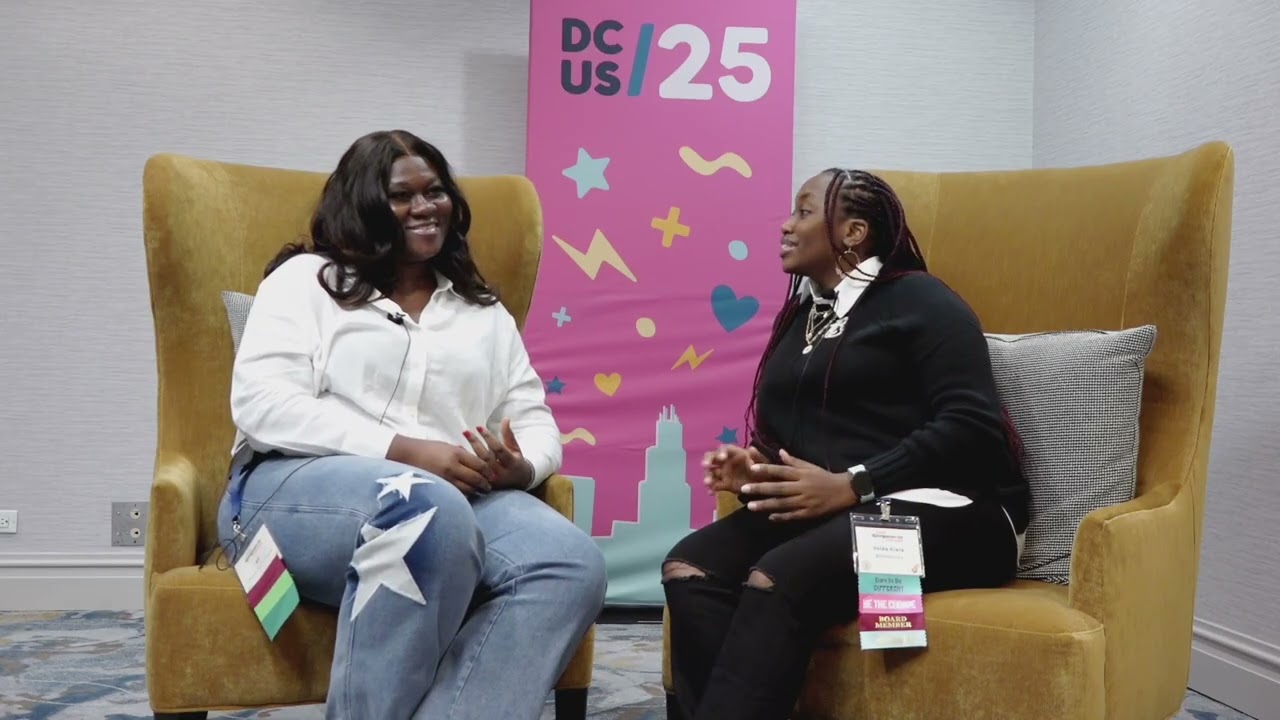
In this conversation from DjangoCon US 2025, Abigail Afi Gbadago shares her experience serving as Program Chair for DjangoCon US and discusses the collaborative effort behind organizing one of the largest Django conferences.
Afi also talks about her leadership within the Python community, including her work supporting Python communities across Africa through Black Python Devs. She reflects on building sustainable communities, supporting local organizers, expanding opportunities through funding, and creating pathways for greater participation in open source.
Whether you're interested in conference organizing, community leadership, or growing the Python ecosystem, this conversation offers valuable insights into the people working behind the scenes to help communities thrive.
Recorded at DjangoCon US 2025 in Chicago.
Learn more about DjangoCon US:
🌐 https://2026.djangocon.us
Abigail Afi Gbadago describes coordinating DjangoCon US 2025’s program, where selecting among many strong proposals and keeping reviews, communications, and volunteers aligned were major challenges. As a regional leader with Black Python Developers, she supports Python communities through funding, mentorship, partnerships, meetups, and leadership development, while stressing transparent spending and documented handovers to sustain the work. With large funding sources reduced, she encourages local groups to pool individual contributions and asks people who can to donate to Black Python Developers, Django, and other open-source projects. She also says DjangoCon keeps drawing her back because of its welcoming community, and suggests stronger sprint planning and more opportunities to feature Black Python Developers’ speakers and regional events.
Summarised automatically from the transcript.
Automatically transcribed, so expect mistakes in names and technical terms.
Speaker 1: Hello again, my name is Velda Chiera. I am part of the Django Events Foundation North America board which runs DjangoCon US Today is day three, the deep dive day, and we're at Chicago. With me is Affie. Affie, would you like to introduce yourself
Speaker 2: Hi everyone, my name is Afi. I'm Abigail Afid Baragoba. Most people call me Afi and that's fine. I'm a software engineer and developer advocate and I'm also on the Django Software Foundation board which now executed for Black Python devs and uh amongst other things Yeah, so thank you for having me here.
Speaker 1: It's a pleasure to have you here. So I understand that today you had opening remarks and that you're also the program chair for this conference. Would you like to talk a little bit more about that?
Speaker 2: Yeah, uh for DjangoCon US 2025, I'm the program chair and that entails the schedule right from speakers to our wonderful keynotes that we've had. It's been a great experience and honestly I have one of the best teams. I have so I had support from the organizing team as well and so far it's been a very good time. We've had really good talks and good keynotes.
Speaker 1: Yeah What is one of the things that was I don't want to say stressful, but what was challenging when you took up from the previous chair who was there for a couple of years into now transitioning to be the program chair for this conference.
Speaker 2: I could say a lot. Like there were quite a number of things that stood out to me and that I had to learn because it was the first experience handling this conference. And I would say it was the selection of talks was quite quite challenging because there were a lot of good talks. Yeah. And I also had we have like a review team that go to the talks and we do like more of like raters and all that. And even with that one with the final output we still have to s make another selection again and Wow, that was a bit tedious. Yeah. Uh aside from that, it's making everything in sync when it comes to um making sure that emails go out on time. also getting enough um like people hands on to do actual work
Speaker 2: because it's the whole program doesn't just lie on just a few people right it's more like a concerted effort so Yeah, that was a bit challenging. Um, but the team the team was so helpful. I got we got people helping in, pitching in, staying up late nights. No, I mean that's not a good thing though, but we got people putting in all their efforts and it was just nice to see because I didn't expect that and I'm so grateful to have such amazing people
Speaker 1: Well congratulations and making sure everything worked out well and that we had keynotes and we had talks. Uh-huh. But I'm really curious to hear your experience being a program chair which is equally demanding to now being the vice executor for uh black python devs in the african region Yeah.
Speaker 2: Yeah, that's true. So I would say one time management and taking up this role I knew it was going to be very Um I 'll say a bit stressful, but I I believed I could do it. I mean I have done it now. Uh I have to split my time in between handing DC US tax and also BPD tax. And I also have P um Avasha who sort of helps me out so that also helps out. Uh so far C BPD has been good. I published the article on how far or the things that have happened under my leadership and how much money we've spent and what we've invested in which strengthens the Python ecosystem in Africa. So on that on that side we're doing so well and I'm really happy I hope more people get to help and donate and pitch in in every way that they can to make sure that we have such a sustainable Python ecosystem there.
Speaker 2: So yeah, on both sides I've just tried to I'm just doing my best.
Speaker 1: It's working because you were doing both And take us through some of the highlights or accomplishment that you listed in your article. What sticks out or what do you remember most about the feedback that you got that you actually featured in the article?
Speaker 2: Yeah, so I got couple of um communities reach out and they go like thank you so much for jumping in and for helping because sometimes you know there's uh a time lapse for you to submit a request for processing and you know the genome foundation also runs like our request our financial request and they help us do this kind of accounting. So but most communities like to bring it last minute or some just pop up up out of nowhere. It's there's a conventional approach of doing certain things and Most often than not, you find out that people do things the unconventional way and for me I just try to do like the best I try to resolve the like the situations the best way that I can and in those situations I realize that most people and communities are happy and the and it gets to strengthen the ecosystem because people get to be there
Speaker 2: people get to learn, people get more representation, they get probably more opportunities because being in those spaces opens more doors for them. And I'm happy when the leads get back in like Oh I feel so sorry for stressing you, but we are happy we've received this. I feel I forgot to tell you this. I feel I forgot I'll be so sorry. Oh thank you so much. I'm like, oh don't worry, it's fine So yeah, those are the highlights and also with the spending, we're just not spending money because everything needs to be accounted for. So it's nice when I realize that, okay, this money that went out went for this event and this is what was direct directed towards because every single request comes with the perspectives or the objectives. You see, so when those things are ticked off once it's given, it's like okay, I can see this happening. I can see like the tangible
Speaker 2: directions of where this funding went to and Those are very nice. I those have good experiences. I just I'm just happy when everyone is happy, when the community is thriving. In the little way that I can. So I mean I'll not say it's easy. Trust me, being the executor for Black Python devs, hmm. I thought it was going to be easier, but it wasn't. It wasn't. It's been challenging, but I'm so grateful for all the challenges and opportunities and and the growth.
Speaker 1: Yeah. They always say heavy is the head that has the most responsibilities and yours seems to be balancing a lot and I think that you're doing a good job because all these things are still running and they're still running smoothly think fully to you and your team. And VecPython Devs is very heavy on impact and the kinds of projects and initiatives that you put resources into to would you talk more about the impact that you've had not just in the African region but if you if you would like to mention that that's totally fine but in a global perspective
Speaker 2: Uh in the block in the global perspective, BPD seeks to strengthen the Python ecosystems So aside Africa, I know I've talked about Africa but that's why I'm focused on but we also have Latin America, we have Europe, yeah, we have other parts of the world which is also handled by other vice executors. And it's practically the same thing. So the vision is to make sure that Python or the ecosystem is accessible to other people in those regions and also to stem out leaders. Because one of the things that we realize with our where we are from is we don't have a lot of leaders so in addition to growing the Python ecosystem is also to raise up a group of leaders or leaders from these communities that can
Speaker 2: sort of grow and strengthen the community.
Speaker 1: Yeah.
Speaker 2: So with regards to impact, I'll say uh we've had a couple of initiatives. I think last year we had the open source program It wasn't easy to pull off. I thought I thought somebody else would pick that try and try that to see if I don't think that went out. I don't think anyone did, but I'll have to see Uh I could definitely give guidance on how I did it last year. I'll have to see more of that. We also had partnerships and collaborations. We did one with Prelutech.
Speaker 1: Yeah.
Speaker 2: Yeah to give technical um mentorship and assistance to um folks in the community who want to learn more Python and upgrade their skills by hands-on projects. So that was great. We've also had um certain talks, right, at conferences And yeah, we've had a couple of um online meetups that would help foster all these things when it comes to leadership and the Python ecosystem.
Speaker 1: Yeah.
Speaker 2: So yeah, I'll say so far so good. You're doing the best.
Speaker 1: The best as you can. That's all that matters. And the other question I'd love to ask you is in regards to sustainability and how you intend Black Python devs to move forward, whether you're at the helm or not. What are some of the things that you as a leader have taken into account? So if you want to step down, I don't know if there are tr term limits yet, but if you were to step down now, do you think their mechanisms are present or in place that could make sure that there's still leadership and that there's still people who are actively making sure that whatever needs to get done gets done.
Speaker 2: Yeah, so in terms of sustainability, yes, there are measures put in place and we don't I don't think we run we don't run for more than two years at a time.
Speaker 1: Yeah.
Speaker 2: And yeah, most likely have it there's a handover plan. So things to do on a daily basis or how to run things or things I've done so far that's more like a report of every single conversation. There are email threads all that like documentation that will be passed on to the next like the next executor to handle so that they are not like oh my god press everything So yeah, in terms of sustainability, there's that on that side. And for me, I like being organized. So yeah, I would love to um pass that down to the next person so that it's going to be easier to pick up and do way better than I did.
Speaker 1: Yeah.
Speaker 2: Yeah.
Speaker 1: And now that we're in a period where also funding is becoming minimalized or not as much as we would want. What are some things that you have seen now that you'd like to advise to people who actually want or need money or support in one way or the other to be able to also hold their own local Black Python devs or even start different communities. to make sure that whatever they know, they get to share with other people and still enrich the Python ecosystem.
Speaker 2: Yeah, so that's a very very good question because in light of the recent um funding that has been cut off for a while, I I think um one of the things I'll say is to try and get together as local community because at some point we have to also put in or contribute to that I think there was one talk in there that when like aside the aside the corporate sponsors yeah you should try and look towards individual sponsoring and I know that sounds like it's just a little but I feel like if we do that individually in in the small concerted efforts it will amount to something you see that could be sustainable. I remember back in Ghana with Black Python devs
Speaker 2: Ghana for such events we do come together and sometimes contribute. Like there there there are certain events that we we pitch in to make sure that it's a success. So Well, this is from my perspective. If we do stuff like that, if I believe it goes a long way. There are others in a community that it's not BPD that I've been in, that have paid like forward like they always pay for it. They s try and find ways of making sure that the community thrives and the ones who come after also get to that point where they also pay for it. So Yeah, I'll say individual sponsorships will be a great way to go since that like the large ones are being shut down and Yeah. I think that'd be a great way.
Speaker 1: Yeah. And have you seen an influx in the requests coming up this year? Or is that something you can even talk about?
Speaker 2: Uh That's that's tricky. Well, I mean, if if there is , I mean it's understandable 'cause one major source of funding has been cut off, so Yeah, and I've seen a couple of write-ups about it. I understand the situation and yeah. Yeah, I mean for backpacking devs we try our best according to the budget and what we have.
Speaker 1: Yeah.
Speaker 2: You see, we try and see if it's sustainable for us to give a certain amount and not go beyond a certain am amount so that we are flexible enough to help like others like spread out across the regions in which we operate
Speaker 1: Yeah, and talking about now more or less about funding, are you worried about the funding situation for Black Python devs and what can we do to make sure that the community still has enough resources until the next funding round?
Speaker 2: Hmm. Yeah, so that that's a very good question. I'm not particularly scared because I know that If people are really passionate, I'm sure we will get like donations, but it's more about the quantity and you know the quantity is what you could use to do things.
Speaker 1: Yeah.
Speaker 2: So for me I'd say if you have the opportunity you can you black donate to black python devs donate to Django of the open source projects 'cause they need that funding to be sustainable, you see. Um yeah, I think that's what I see on that on that question. That's Yeah.
Speaker 1: Yeah. And you mentioned that you were not allowed to rerun for the same position in like two years.
Speaker 2: Yeah.
Speaker 1: How what year are you in right now as device executor?
Speaker 2: Uh I'm currently in the first year, almost at the first at the end of the first year. We don't run for more than a year to avoid burnouts because you see it seems like these rules seem so simple and something that but it's until you get inside people could stay behind go like it's just a role like a volunteer role like you know it's like an actual job but it is an actual job. People in other space are being paid to do this. Do you understand? So for me I would Yeah, uh I believe it's a very good mechanism put in place to make sure that you don't overstretch your burn yourself out in this pace. So one year you could either take a break and come back or just go for a year or um come back for a second year. It's all up to you.
Speaker 1: Would you like to run for a second year?
Speaker 2: Oh um well if If I'm s if I'm strong enough, if um well rested, if there's the time and capability to do that, definitely I'll always be supporting BPD while we're the other. So yes, I yeah, well.
Speaker 1: You you're certainly well or you're you're in the deciding phase. You don't have to answer you Well not want to.
Speaker 2: Well well for me I've had the experience. I love for other people to also come and experience and do more magic than I have done. So yeah, I'm sure there there are a lot of people lined up waiting to take up the role and transform and do all awesome things and I c I can't wait for that. So I'll just take a seat and allow others who want to take up that role to do amazing things.
Speaker 1: Yeah. And that sounds good. You have done a l a tremendous good job and you have done a lot for the community. But now one last question. Why do you keep coming back to JingleCon US?
Speaker 2: Yes, yes, yes. Uh my first DjangoCon US was in 2023 and It was wow, I was so new, I didn't know anyone and I d I didn't even understand why I was wait I knew a few people But I didn't understand why I didn't came to a place where I knew only a handful of people out of like hundreds. But I realized that the environment here was very en gearing was very warm.
Speaker 1: Yeah.
Speaker 2: Right. And it at that at that time Django was a framework I used to I used at work.
Speaker 1: Yeah.
Speaker 2: So I was just like oh just like a conference for something I'm I I know I'm or I'm familiar with. And also um I was a speaker then in twenty twenty three for my was a migrations talk and yes, so Yeah, uh one thing that keeps on making me come back is this like the people will our learn and the network and connections and I love that so much. I will forever come for Jam Calling you as as as long as I can because that thing would go like you came for the war
Speaker 1: You came for the language you stayed for the community.
Speaker 2: Exactly. You stayed for the community and it's yeah, it's very warm, it's welcoming, you get to meet people from networks and they become like more like family.
Speaker 1: Yeah.
Speaker 2: And I love that so much. I I don't see it in a lot of communities and I don't play with the Django community. I love the Django community. I don't play with the Django community. So
Speaker 1: Yeah.
Speaker 2: Yeah, I'm so happy to meet all of you and Come here be here.
Speaker 1: We're happy to have you. And do you think you would love to still do stuff with a program, community or comedy for DjangoCon US next year. Is that something you're thinking about?
Speaker 2: Yeah, definitely. This year has been um the first experience handling program and I'm so grateful to Drew. You in the beginning I was like, does you really want me to do this? Because I feel like but after going through this process till now, which is the third the third day, the deep bride. I'm like wow. He yeah, he really did a lot. Last we had Erin also like pulling in the team doing so much. Yeah. Yeah, I'll I'll really I'll love to do that next year again and this time it's with every fresh per perspective because I've been through it, I've seen like the things I did wrong, things that skipped me, things I anticipated. And even though it happened, it didn't happen in the sequence that I anticipated. So it's like right now if you c if you have like contingency plan
Speaker 2: A and B You didn't see C. So let's say you have to think of C, A, B, C is like, ah, there's a long retrospective we'll probably have after this to see the things that will probably help us like help me and the team do it better next year. And I'm so grateful for everyone who pitched in, the reviewers, the people who joined the calls, the people who who replied to the Slack, because at one point I was like, oh my God, I'm talking so much in the Slack Yeah. But I'm so grateful for everyone, like putting in your like the work, joining the calls, answering questions. Yeah, I really I really love so many people who
Speaker 1: Yeah, lady
Speaker 2: really stepped up. I didn't expect it from certain people, but they did. I'm so happy about that
Speaker 1: I mean I'm glad you got the support that you had and I'm glad you had people around you who also made it easier for you to be a better program chair. And one last thing, I know I said this two, three times. I still want to still be on the chair for more questions. But yeah What are some of the things w that you would definitely be able to do or Rather, what are some of the activities you'd love Black Python devs to do more in collaborative with JingleCon US?
Speaker 2: I would say um a more defined sprint.
Speaker 1: Yeah.
Speaker 2: Yeah, because you know uh yeah a more defined sprint process.
Speaker 1: Yeah
Speaker 2: and more activity in the form of like getting BPD speakers to like speak or let's say give learning talk on things they are hacking on or building.
Speaker 1: Yeah.
Speaker 2: Or even highlighting conferences happening in their local like regions, either online or the either online or in person. And probably some booth activity.
Speaker 1: Yeah, that wasn't there this year.
Speaker 2: Yeah, yeah, yeah.
Speaker 1: Yeah, that sounds good. And thank you for your service both at also the Jingle Software Foundation, Mback Python Doves and also for Jingle Connie West. It seems like you do a lot. And I don't know how you do all that, but it It seems like it's working for you on top of your developer advocate job of MongoDB. So we appreciate you for your service. Thank you for choosing to come to this conference year in and you're out. And we'd love to see you next year.
Speaker 2: Thank you. I'll see you guys too. I love being here.
Speaker 1: Thank you. That was our well that was our fee, ladies and gentlemen. See you soon.
Selecting among many strong talk proposals was difficult, even after the review process. Coordinating timely emails and getting enough people involved to share the work were also challenges.
Discussed at 1:38It works to make Python more accessible across regions and develop community leaders. Its efforts include open-source programs, technical mentorship, conference talks, and online meetups.
Discussed at 7:09It plans for a handover, passing along documentation, reports, email threads, and practical details about ongoing work so the next executor can take over smoothly.
Discussed at 9:41Afi recommends local communities pool individual contributions; even small contributions can add up. She describes community members in Ghana pitching in to make events happen.
Discussed at 11:08She values the welcoming community, the people she learns from, and the connections that become like family. She first attended in 2023 and has continued returning for that sense of belonging.
Discussed at 16:17She suggests a more clearly defined sprint, more opportunities for Black Python Devs members to give talks about their work, visibility for regional conferences, and possibly a booth.
Discussed at 20:07Note: We understand that names change, people change, and bodies change. We respect each individual's journey and privacy. If you have any concerns about a video or need us to remove content, please don't hesitate to contact us. We will handle your request with care and promptly address any issues.

Published July 15, 2026

Published July 15, 2026

Published July 15, 2026
Published July 15, 2026
Published July 15, 2026
Published July 14, 2026
