0:25:16
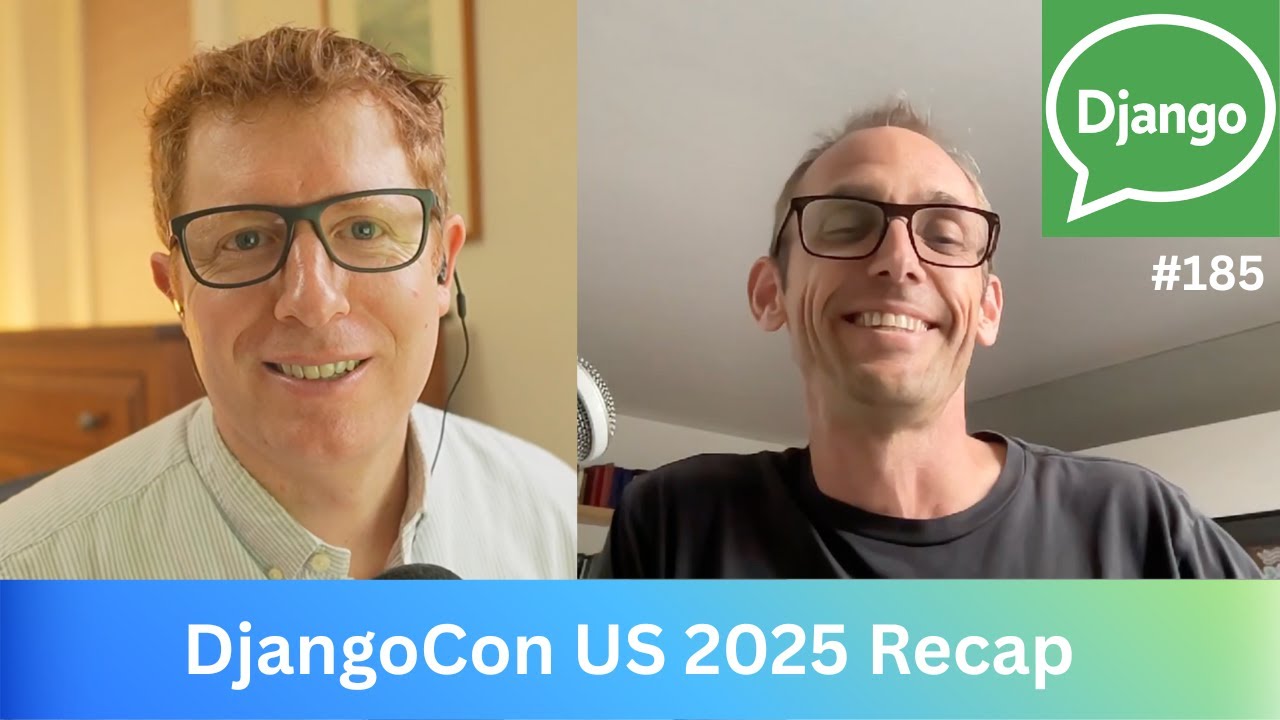
Modern Django Deployments in 2026 with Will Vincent
Published October 26, 2026
This video features Will Vincent at DjangoCon US 2026 in Chicago, Illinois, USA.

In this conversation from DjangoCon US 2025, William Vincent reflects on the impact of AI and LLMs on software development, why trust matters in technical education, and how books, podcasts, newsletters, and open-source resources can help make Django more accessible to new developers.
Whether you're interested in Django, developer advocacy, AI-assisted development, or teaching others to code, this interview offers thoughtful insights from one of the community's long-time educators.
Recorded at DjangoCon US 2025 in Chicago.
Learn more about DjangoCon US:
🌐 https://2026.djangocon.us
Automatically transcribed, so expect mistakes in names and technical terms.
Speaker 1: Awesome. So we're at Django Con US twenty twenty-five in Chicago Today is Tuesday, the second day of the conference. Yep. And with me is Will. And I'd like you to introduce yourself and tell us what you find interesting to do. It can be in tech or not in tech?
Speaker 2: Sure. So uh Will Vincent, I'm a developer advocate at JetBrain's PyCharm. I've been in the Django community a long time and I'm interested in Django and AI and how they fit together right now. So I gave a talk yesterday on that topic and thinking about how Django can fit into this new AI world that everyone 's talking about, but I think most people don't really understand uh what it actually means and what it means for us as web developers.
Speaker 1: Yeah. And we've seen a couple of comments which are extremely positive and extremely negative about AI. And now that it's here, what kind of advice would you give to both sides?
Speaker 2: Yeah, so I mean the hard part is AI as an engineer is a such a vague term that it's people define it how they want. I think we're mainly talking about LLMs. Yeah. Um so ChatGPT and Claude and you know my company We've integrated this into our products, but we don't, we're not a frontier model company, so we're not aggressively slamming it on people. So we try to take what helps developers. It definitely helps them somewhat. Does it replace developers? I don't think so And I'm worried about the next generation of developers and how they learn, given that those early stages you can kind of not cheat your way through, but instead of having to like actually type the code if you vibe code and use an agent. you're not loading it in your brain in the same way. Yeah. Um that's the issue I have. Even if I vibe code something effectively, if I haven't physically typed it, it's not
Speaker 2: there. In the same way like writing something down helps you remember.
Speaker 1: Yeah. Um
Speaker 2: so I mean young people figure it out. I'm old, but uh it's a different way of learning now. Instead of going to Stack Overflow or Google or books, people are just going straight to the LLM.
Speaker 1: Yeah.
Speaker 2: Um which helps and is fast, but you can't trust it. And so I think it's also an opportunity for those of us who do create content to like lean into trust, right? So what do we have to offer? It's like we trust something from you, something from me. Um so we have to lean into that a little bit more.
Speaker 1: Yeah, and speaking of education, I think you've also been in a way in the education sector for a long time.
Speaker 2: Yeah, I know. I got I got white hair, so it's coming.
Speaker 1: Could you tell us more about that? from becoming a writer to a speaker. Yeah.
Speaker 2: Yeah, so I um I have three books, Django for Beginners, APIs and Professionals that I've updated. The last six years. I do a regular podcast, Django Chat, with Carlton Gibson, who is a Django Fellow. I do the Django News newsletter. with Jeff Triplett, which is a weekly newsletter for six years. I have open source. I run a site called learnjjango. com. Yeah, it's too many things to be honest, but I'm really passionate about teaching people because I learned how to code as an adult.
Speaker 1: Yeah.
Speaker 2: Um, so I was I worked I started as a book editor, then I got a business degree, and then I worked at startups, and then I learned how to code and I just felt it was poorly explained to someone who didn't have a pure engineering background. So my whole mode has been if It's difficult for me, it's difficult for someone else. Um I think that's a so it's a little bit um uh not narcissistic but egotistical but you have to be a little bit to think that anything you do should be put out there. But I just know people learn differently because I found the existing stuff didn't work for me. Yeah. And so I still have to remind myself if anything I find confusing Others find it confusing.
Speaker 1: Yeah.
Speaker 2: And um I have a way of presenting things. It's not for everyone, but people who like it, they like other things that I do. And I do that the same way with people I learn from. If I see something in your style, I'm like, I'll consume everything. So I think we need more people making Django accessible because it's not Rocket science.
Speaker 1: Yeah.
Speaker 2: Um, but people who use it day to day get lost in the weeds and it's harder to pull yourself up and think about like a beginner. I have that challenge now. Actually, like I've I find certain things more interesting because I've been doing it a long time. But when I talk to beginners, I come to conferences, I'm reminded of that perspective. And I think teaching to me is like the most challenging thing. It's the thing I enjoy even more than code
Speaker 1: That sounds exciting and I like the fact that you pointed out that you started coding as an adult. Yeah. And you also got a business degree. Yeah, and then you got a business degree and I wanna ask how does kind of like how do you get that knowledge from business and try to convert it to what you do in a day to day because poorly. Yeah, I'm trying to connect business with what you do now. Like they're kind of like a similar things because it's still trying to provide value to people which is like on the business side. Yeah. But I want to know why did you choose to do a business degree or did you not know about tech Then or
Speaker 2: Oh sure. I mean so I I started off as a book editor and that went reasonably well, but the book industry went like I was there right when Kindle came and I looked around and um consolidation, all the people I wanted to be were getting fired And I was still young and I thought I have a brain. Um and I saw our marketing budget was going to websites, which was a foreign idea back then. Yeah. So I l uh got into business school and I learned how to program basic websites and I have small business building websites for book authors.
Speaker 1: Yeah.
Speaker 2: And then I was like, I want to go to the West Coast. I want to work in startups.
Speaker 1: Yeah.
Speaker 2: Um I did that. And then uh yeah, the personal answer is I became a parent and I wanted a little more control over my career. Yeah. And I like the intellectual challenge of coding. Yeah. So I just l have a romantic idea of a writer or a coder just sitting like this morning I sat in my room at five AM and I created something.
Speaker 1: Wow.
Speaker 2: And I love that feel feeling and when you work pure business you get different kind of satisfaction but you don't get that creative satisfaction. Yeah. Um and so hopefully that helps me understand the different sides like the business perspective, the coding perspective. Yeah. Uh I always want to I just find people interesting, right? And so trying to figure out what is the real problem. It's not the code, it's not this and that. It's um trying to solve a problem that someone may not know they have.
Speaker 1: Yeah.
Speaker 2: So when I before I learned how to code I had all these ideas and I thought, ooh, once I learn how to code, like you know, I'll be like a billionaire, I'll have all these startups. And now I have the opposite problem. Now I'm like eh, I could kind of build most things or I could work with people to build it Yeah. But I lack the uh industry knowledge. So I think in some ways, um, you know, as as developers we just want to scratch our own itch, so we're all develop building developer tools. As Jeff Brains does, but that's a really hard space to actually to sell into. Yeah. Um I would say the best combination is someone with industry experience in any industry plus tech because every industry needs tech, but you need someone who knows the industry and also knows how to communicate it to people and it's difficult to be a coder, stay relevant as a coder. and combine it.
Speaker 2: Yeah. So um some people can do it but uh th I think that combination of industry plus tech and just realize that the tech is secondary to the business objective.
Speaker 1: Yeah.
Speaker 2: Um and that's fine. Like I I view it as serving whatever the need is of a person.
Speaker 1: Yeah. Um
Speaker 2: so anyway, so yeah, I'm open to ideas. If anyone has great startup ideas. Yeah. Um but And then AI is just another layer on top of that, of speeding things up, but also it's overhyped in some ways and underhyped in others.
Speaker 1: Yeah. I like the fact that you brought up like you came in from a book editor to now writing your own books. Yeah. Do you edit your own books?
Speaker 2: Oh yeah. I mean no, I mean uh it's all me For better or for worse. Yeah, I edit the uh no technical editor, no copy editing, it's just me. Um I don't really think about it. I mean maybe I should think about more, but I think because I had the formal background, I know what that involves because I used to do it.
Speaker 1: Yeah.
Speaker 2: Um And it was like, well, I'll just do it. Um also the advances in technical book writing are non-existent. So no one was gonna pay me to write a book. Yeah. And now I could publish through a publisher, but like why? Like they don't um That's a separate discussion. Like they provide some value to some people. I think most people actually should probably go through a t through a publisher.
Speaker 1: Yeah.
Speaker 2: But given my background, um And wanting to actually m potentially make money from it as opposed to just use it for consulting or promotion.
Speaker 1: Yeah.
Speaker 2: Um I think you're better off being self-published.
Speaker 1: Yeah. And now in the self-publishing part is you had you used to sell books in like Amazon, but now you have your own site.
Speaker 2: Well I still do.
Speaker 1: Well not So much as encouraging people to just
Speaker 2: talk about that if you're interested.
Speaker 1: Yeah, I mean I want to know why did you shift everything to just being on your side as compared to just using other third parties to
Speaker 2: I did use um I still use um Lean pub to help with some of the generation and I used to sell only through there so that you can do ebooks. Yeah. Um so I do eBooks and then Amazon. Um and then I switched to Gumroad for a long time, um, plus Amazon. And Gumroad, um There's a bunch of reasons why I just felt like moving away from it. Um and one of them is I w I wanted an online site that I could update all the time and not have this whole process of generating the books. I also Then I know who the user is, I have their email address, I can communicate with them, I can offer deals. Um there's a privacy issue that I try not to be negative about, but like every day there's another free you know PDF books sites somewhere and so you know
Speaker 2: when I see I I I know that people need to have access to c to information but when it's so easy to steal That's sort of a bummer as a content creator.
Speaker 1: Yeah.
Speaker 2: So uh yeah, so I think online site is also a fun project to do.
Speaker 1: Yeah.
Speaker 2: Um And yeah, and and so I prefer to print because A I make twice the money and B I know who the person is, so then I can have a relationship with them and um offer new products or they can get the updates right away when I update the books. So it's just a better flow. I think in some ways technical framework books They update too often to really sit on a bookshelf collecting dust. So maybe a Python book. I'd love to do a Python book. That could be more of a book book.
Speaker 1: Yeah. I mean speaking of books, we know that you updated your jingle for beginners to five point oh.
Speaker 2: Yeah.
Speaker 1: And You're five plus yeah, five plus and like uh you also updated the Django for APIs that is publicly available. But you published a post on LinkedIn that's said that you were going to be rewriting the Django 4 professionals. Yeah.
Speaker 2: But it just was like seared into my consciousness how
Speaker 1: I was
Speaker 2: bad that was.
Speaker 1: Yeah, I mean I'd like to say like I appreciate you uh updating your books and trying to make it better because honestly I wish I really had read it earlier on because I would have saved myself a lot of headaches.
Speaker 2: Well, but you know, you learn through pain. I hate to say that. Like pain's not good, but you know
Speaker 1: It's necessary in a way.
Speaker 2: Yeah, you need you you know, what's the right what's the Zen uh the Zen flow of like you need enough so you're like uh Um but you know but banging your head against a wall is too much. And that's kind of my met that was my metric. It was like if it took me back in the day more than like two days on something, I was like Try to get help. And now I still have that, but it's a shorter time frame. But you know, I'll give it well, I don't want to throw numbers out, but I don't give it an hour on something. I'm like, I know where to look and I'm like, okay, if I'm stuck, I want to go see Am I not understanding it or is it one of these like religious debates in the community? And that's actually a great you know, LLMs are great for that now because they can do deep research. Where if it's a niche thing I can I can ask it and it'll often uncover you know, a track discussion way back when about something.
Speaker 1: Yeah.
Speaker 2: Um so it's getting better in some ways. I just think it's more overwhelming. The fire hose of content you can get Um I think you still need a trusted source who's a human who will um s you know, mentor you. I wish if If I could pay the bills, I'd happily just like mentor people all day long. It just doesn't scale.
Speaker 1: But I think in a way you are kind of mentoring because you're already doing a lot of books. And like in a way that's like you talking to readers through your books as well. So you kind of like are mentoring in a further away perspective.
Speaker 2: Hopefully a scalable way.
Speaker 1: Yeah. And plus you mentioned that you tend to also like to reach out to people who buy your books from the site directly. So I think if they had questions about the book, they could still reach out through the same thing.
Speaker 2: jango. com Um if you know the I would the one thing I would say is because I do get a lot of emails, if there's questions about Django that aren't specifically in the book, go to the forum. Yeah. But anything about the book, I'm happy to
Speaker 1: chat about it.
Speaker 2: And that's one of the nice things about this conference is I I meet people who I've uh interacted with online beforehand about whatever it is. You know, maybe they know more than I do or or they learned with the books. And then to match up a face when we have that. online relationship before.
Speaker 1: Yeah, yeah. And I think m the first time I met you was in JingleCon US twenty twenty three and I was so excited to meet you because I was like, oh my God, I get to actually with the person who wrote the book and it was such a mind blowing moment for me and the fact that you were also like really down to earth and kind and you were open to answering a lot of questions that I had because I was like You're talking to me. You're so famous. I wonder if you're not going to be able to do that.
Speaker 2: Well, you know, I remember that with I I had um the two scoops of Django book that Danny and Audrey did, and um You know, they were very friendly and had personal interactions with them. So I remember that feeling or the first time I met um you know, Jacob Kaplan Moss and Simon Willison, I was like You know? Oh, you're just a person. You know, and that's I think that's somewhat unique to Django, that people are accessible like that. Um yeah, and the reality is for me, you know, everything is digital, so I it's only at Django Cons or that I get in person. You know, I I don't work in an office with programmers.
Speaker 1: Yeah.
Speaker 2: Almost none of my friends are programmers. Yeah. So I have like my online life and then this is sort of like you know the manifestation of it. Um so I'm not just like You know, and I think it's good for me, right? Like nobody cares about what I like I even I have a friend who's a fellow dad. Kids are friends, I coach soccer with him We never asked what the other did. Like four years in, I mean it's a guy thing. Four years in, he was like, wait a minute, is this you? And I was like he found I was like I was like, yeah, he's like, I'm trying he's a Python developer. He's like, I'm trying to learn the web. Pollute that with you know. Which I would have been happy to talk about it, but um as an adult, especially in the US, sometimes it's like what do you do? Like how important are you? And I really like Not ha you know, have that in a space for that and then have a space for just everything else.
Speaker 1: Yeah. And I remember one of the conversations we had was like, how do you become an author? And I think we talked about that extensively. But now since you brought in the topic of self-publishing. What w what advice would you give to somebody or other people who would love to write books and what are some of the pathways they would take to actually self-publish as well?
Speaker 2: Yeah, you don't need permission. You can just do it. I mean I wrote In hindsight, I don't know if I would write the books because I knew so little when I wrote them, but I wrote them for myself and then uh I'd put it online and people seem to like it. Um so you can just do it. Like just do it in Markdown. You can use Lean Pub, there's online engines. You can hire someone to lay out your books for a couple hundred dollars.
Speaker 1: Yeah. Um
Speaker 2: Or go through a company if you have a good idea, like they will help guide you. I don't want to say anything negative about them, because I I was a book editor, right? Um so if you've never had that process gone through that process, it's super helpful. They will assign you an editor to help edit it. They'll find a technical editor, they'll help with design. Um because it'll it'll take way more time, way, way, way more time than you think.
Speaker 1: Yeah.
Speaker 2: Um so I would just say Yeah, anyone anyone can do it. Anyone should do it. We need more perspectives. We need more books. It also doesn't have to be 500 page book. It can be a 200-page book. Or it could be Whatever perspective you bring, um we need that in the community.
Speaker 1: Yeah.
Speaker 2: So um but also I would say like for me, my first book, I had an online website. I had DjangoForbeginners. com and I posted uh chapters and then at some point I was like well maybe I should just like make it a book. And I had that moment where I just like made it a book and someone bought it And I was like, oh my gosh, like, really? Someone bought this. But at the same time, because I had it out there, and again, it's a different different time. It was like almost ten years ago. Yeah. I had uh discus comments and I had a lot of traffic and a lot of comments. So the book got better from online people. So then you know they got free content, but I got free feedback. Yeah. So you don't have to just dump a book on the world. Like you can just put online and have a news that's what I would do now. I would have uh you know, Wagtail or something, just have a site, have a newsletter, and just release the chapters or update them and people will give you feedback.
Speaker 2: Yeah. Especially if they get value from what you're doing. So that was really helpful to keep me going and also to make the book better before I published it. But also when you self-publish it, like you can just change it.
Speaker 1: Change it as much as you wanted.
Speaker 2: You can change as much as you want. Um and so I change my books, you know, hopeful not enough, but like it's possible to just update them or because I'm self-published, like if someone saw something, I can go in make the change tonight And then all the future versions on Amazon are updated.
Speaker 1: Yeah.
Speaker 2: Or better yet, I can just do it on my own website now and I don't have to Spend that time.
Speaker 1: Yeah, and speaking about actually now specific to Django and the DSF, you've been part of the community for a long time. And I would like to ask you what keeps you coming back? What keeps you bringing value to the community, coming to conferences, talking to people, like what do you like most about all that that keeps you here?
Speaker 2: So with my job at Jeffrain's PyCharm, I go to more conferences like Python ones. Django is like the safe, happy space where I think part of it is the size is just right where there's new people but returning faces and we have our disagreements but everyone is Nice. Um you know Python is big enough and important enough that there's more rough edges and also people are doing different things. Like here we're all doing the same thing, you know, at a PyCon Some people are doing AI, data science, web, different types of web. That has a value, but it's not it doesn't feel like a a family. Um so I just like I come out of these conferences energized and then it like carries me to the next one or people come up and say they like the podcast. I'm like, all right, we should keep doing the podcast. You know, or the new you know, and it
Speaker 2: 'cause it doesn't take much and it's not that I'm fishing for compliments, but and it I for me I I like people even though I work in an introverted field, I'm not especially introverted. So having that human connection and insight, um carries me forward in those times when I'm just like fighting with the computer um around content specifically. I'm like, okay, yeah, there is someone out there who cares.
Speaker 1: Yeah.
Speaker 2: Um Because I have moments I'm like, do I really want to like spend twenty years doing the same stuff?
Speaker 1: Yeah, but I think you also do like different facets of it that you wouldn't get bored because you're also doing like the packages, you're doing like the books, you're doing the newsletter, you're doing the podcast and you're writing too much.
Speaker 2: I wish I was just like one thing. Yeah. I mean
Speaker 1: I feel like it kinda like works in a way.
Speaker 2: It does, yeah. I th um I mean I'm very happy at my job now 'cause I get to pay to do a lot of this stuff and to work on a product that ties that all in together. So that's been that's been fun. That's been a new experience to like I can come here, I can do people can give me feedback on using PyCharm or not using PyCharm on what they like on other IDEs and then I have um teammates and I'm part of the process of making a product better. Um, it's nice just separately, that's also really nice. Like I'd always planned to work for a company, but I really like the company where I'm at and it's nice to um I was s pretty much self employed for a number of years doing consulting. I mean, I know you know a little bit how this works. Like it can you know, it's just you. Yeah. Um and that's great when it's great, but then sometimes It's not so great. It's not so great.
Speaker 2: So it's a nice balance I have now. Um but yeah, I guess I just like the community. I like the people. Yeah. I think the web is important. I think Django still like we're s you know we're not I'm not gonna say names other communities we could just be like more and more irrelevant but Python is more and more important all the time. Python's been growing Django's growing So there's a sense of like just hang on and there'll be wells of like ex excitement or this and that. I mean I'm personally super excited about how AI and Django fit together. Yeah. I think there's so much there so I've been learning a lot about data science this year, which is super cool and interesting and also not that scary Like you don't have to do matrix multiplications and linear algebra. Like I mean you should know about it, but you're not doing it, right? In the same way that I'm not writing all of Django from scratch.
Speaker 2: Yeah. I'm using it. So um that's been cool and I think Django has a role to play to help people doing data science stuff use the web.
Speaker 1: Yeah.
Speaker 2: Um so I don't know, it's kinda fun.
Speaker 1: I mean it does sound fun and considering you came from like a background of where you would work for yourself and now ad jet brains. How's the transition like and how are you adjusting to all that?
Speaker 2: I mean it's a transition. I knew it would be Um the company's great, my boss is great, I work remote, I do a bunch of travel. Uh there's a lot of autonomy in the role which works for me having done my own stuff.
Speaker 1: Yeah.
Speaker 2: Um so that's great. I think if just me personally, if I had If I was just getting tickets to do all day, that would be amazing for like six months and then I would be really frustrated. Yeah. Because I always want to think about like what's the real issue here.
Speaker 1: Yeah.
Speaker 2: And so I get to wear a bunch of hats like part product, part marketing, part um giving talks.
Speaker 1: Yeah.
Speaker 2: Um yeah, and I think it's a separate discussion, but JetBrain's It's a privately held company. Um a lot of what they do aligns with how I feel about the tech space.
Speaker 1: That's exciting to hear. And now that we have like the Django Events Foundation in North America that is DAFNA that runs this conference. We're trying to spotlight more authors or and more writers or other people who are in content that we could help them spread the word about whether whatever they're creating. What are some of the things you think we could do to help other authors like you who were already in the business?
Speaker 2: Well there's a disc uh not disconnect. There's a divide where if you go on YouTube, um For one example, um most of the people who are big on YouTube for Django have never been to a Django Con. Yeah. And that's f that's fine, that's healthy, but they're very I wish there's a little more overlap there. Same thing with book authors. Some of the Django book authors are here. Some of them have never are not directly involved in the community So I guess you don't want to exclude any book authors just because they're not able to come to Django Cons or participate for whatever reasons.
Speaker 1: Yeah. Um
Speaker 2: So I don't know if that that's not really an answer. I just it's a it's a broad world. I think about this, right? I think also I care a lot about Django and for myself um You sometimes need to like ebb and flow how much you participate directly in Django because it's a wonderful thing to do, but it It can take up a lot a lot of time. Yeah, a lot of time. I mean you know this. I mean I was on the board for three years, which I love doing, but I think it was good for me to step away. And then and many of the people here who've done these roles now help out in other ways.
Speaker 1: Yeah.
Speaker 2: Um So to answer your question, yeah, I don't know, DjangoBook. com, like we sh I read every Django book. Like I I think there's something positive in all of them. It's not a competition. There's There should be thirty books on Django.
Speaker 1: Yeah, and I feel like every book is unique in a way, even if it's maybe we could have three versions of Django for beginners because Sometimes they're all right. Yeah, of course.
Speaker 2: Yeah, yeah. Well, but I most most people write uh slightly more advanced books, which I totally get because it's more interesting for them.
Speaker 1: Yeah. Um
Speaker 2: So yeah, but I mean they should. Um, you know, I mean that was m my big thing when I started out was like I didn't want to skip any steps.
Speaker 1: Yeah. Um
Speaker 2: because I would try to follow tutorials and they would just say, Oh, you know, we'll just hand wave and start here and I was like I I couldn't get there. Yeah. Like I did I didn't know what it you know, or they'd say, well just clone this repo and then we'll go from there. I was like, well what I just clone? Yeah. You know, so I'm trying to find I'm in my own content. I don't want to have to do everything from scratch every time. Yeah. But I do want to take you from point A to point B and maybe I don't explain every step, but I want to show every step.
Speaker 1: Absolutely. Yeah, you know how he feels like to be able to do that.
Speaker 2: The the web is so new and so and programming is so new and it's so fluid that um people who know you know the economics don't really back up
Speaker 1: Yeah.
Speaker 2: Um so you have to want to do it for your own reasons. Um
Speaker 1: I agree.
Speaker 2: Yeah. So are you gonna do you are you gonna do a book?
Speaker 1: I don't know, who knows? Maybe next time I'll let you know if I'm doing a book. I'm trying to, but at the same time I'm like I really have like how my mind works is like I have all these things but I also need to like cut down in what I want The book to say and what I don't want it to to say, sort of kind of thing.
Speaker 2: I would say blog. I think you want to just like I think about constantly trying to like minimize the friction between idea inspiration and and something out there. Yeah. It's like even if you did twenty blog posts and then you had a book with twenty chapters.
Speaker 1: Yeah.
Speaker 2: Like People they're separate things. Not maybe in your head, but they're completely separate things for people.
Speaker 1: Yeah.
Speaker 2: Um, so that's what I think about and now with video I'm trying to do stuff at work.
Speaker 1: Oh yeah.
Speaker 2: It's a new challenge, but I'm trying to find what's that like 80-20 where I can still do video, reach people where they're at, make it a little more dynamic, but not. you know, become a video producer. Which is not what I want to do and not what I'm good at.
Speaker 1: Yeah, that's that sounds so cool. So one last question. If you were having like this, I don't want to say your last day, but let's say in a hypothetical that you were going to leave all this behind and change careers, what would make you smile when you're having tea as your last day.
Speaker 2: Like thinking back on the journey.
Speaker 1: What what do you think you would miss most?
Speaker 2: Oh um I think it would I mean it would be stuff like this. It would just be meeting people who had some connection to either the community or something I did and Uh it's those connections 'cause I like people. Yeah. Um that's yeah, it's I mean that's what everyone says. It's the community, it's the people. Um and there's something really nice about we're all volunteers.
Speaker 1: Yeah.
Speaker 2: It means sometimes things don't move as quickly as we'd like, but be Everyone's coming from a good place.
Speaker 1: Yeah.
Speaker 2: Um, and that's super powerful and that's super rare.
Speaker 1: Yeah.
Speaker 2: Um, and we're working on something really important too. So I think that would be yeah. I don't I don't have any plans to do that. You know, I think you don't have to it's not an all or nothing thing.
Speaker 1: It's not because I mean you've had such a huge I would say career and like accomplishments that you've done.
Speaker 2: Well thank you.
Speaker 1: In my opinion. Yours might be a little bit yeah. And I think maybe even you could encourage somebody who would like to come to this conference for a long time.
Speaker 2: Yeah, I mean so my whole yeah. Um the f my whole Django career is based around coming to one of these for the first time. So it's twenty eighteen. I think I'd I'd written first two books for some reason Oh yeah, because I was in between jobs. Um so that was a stressful period but out of that came these books. And then I just applied and I saw that if and I didn't I didn't have a lot of income at the time, but I saw that if I had a talk accepted they would help cover some of the travel. And so I thought, oh okay. And then my talk was accepted, which was like very fortunate because it's very competitive for talks Yeah. Um and then I stood up and gave a talk and in the audience was Carlton Gibson who gave me feedback it was on APIs and he was a maintainer of Django Rest framework and he gave me some feedback and And I met Jeff Triplett and I met Frank Wiles and I met all these
Speaker 2: um I'm sure I met Jacob or Simon. Um and just everyone was I was like, wow. But you know, I remember that first time at night. Yeah. I didn't everyone to go to dinner with. I didn't know anyone, you know. It was like I was like what the Um but from that uh came fr friendships, came the podcast, came the newsletter, came the inspiration to do uh more books, you know. So I think it's that, you know, we're we're fighting with computers, but it's all about people and the community is so welcoming. And I've been to other tech conferences and They're not like Django Cons. Yeah. You know, I mean how could they be?
Speaker 1: I mean they can't compete with
Speaker 2: Yeah. So there's ways to come. So the videos are online. I watch I try to watch all the videos. Like they're so underwatched. It's such a graduate school and Django. Yeah. Um there's scholarships and ways people can try to come. Um a lot of what I do with the podcast is try to mimic the people and the vibe here and make it accessible because that's I didn't know what a hallway track was.
Speaker 1: Yeah. Like
Speaker 2: hallway track I was like, What does that mean? Who's that? 'Cause I sat to every single talk. I had a notebook and I took notes because I was like So um yeah, find a way to come, find a way to get involved, um, and people will try to help you out.
Speaker 1: Awesome. Thank you so much, Will.
Speaker 2: Yeah, thanks for
Speaker 1: and that was Will. And Welda, my name is Welda Chiara. I am a Django Events Foundation of America board member and I Like to thank Will for coming on to our sort of like interview and chat.
Speaker 2: Yeah, thank you.
Speaker 1: Come to JingleCon next year or even watch the videos. or maybe get an online ticket. Everything works as long as you're part of the community. Thank you.
August 24 - 28, 2026
Chicago, Illinois, USA
Note: We understand that names change, people change, and bodies change. We respect each individual's journey and privacy. If you have any concerns about a video or need us to remove content, please don't hesitate to contact us. We will handle your request with care and promptly address any issues.

Published October 26, 2026

Published October 26, 2026

Published October 26, 2026

Published October 26, 2026

Published October 26, 2026

Published October 26, 2026